

 Jam
 Pickles
 Canned Vegetable
 Syrups
 Vinegar
 IQF Vegetables
 IQF Fruits
 Fruit Strip
 Iranian Foods
Guide to Importing Bulk Canned Vegetables for Foodservice

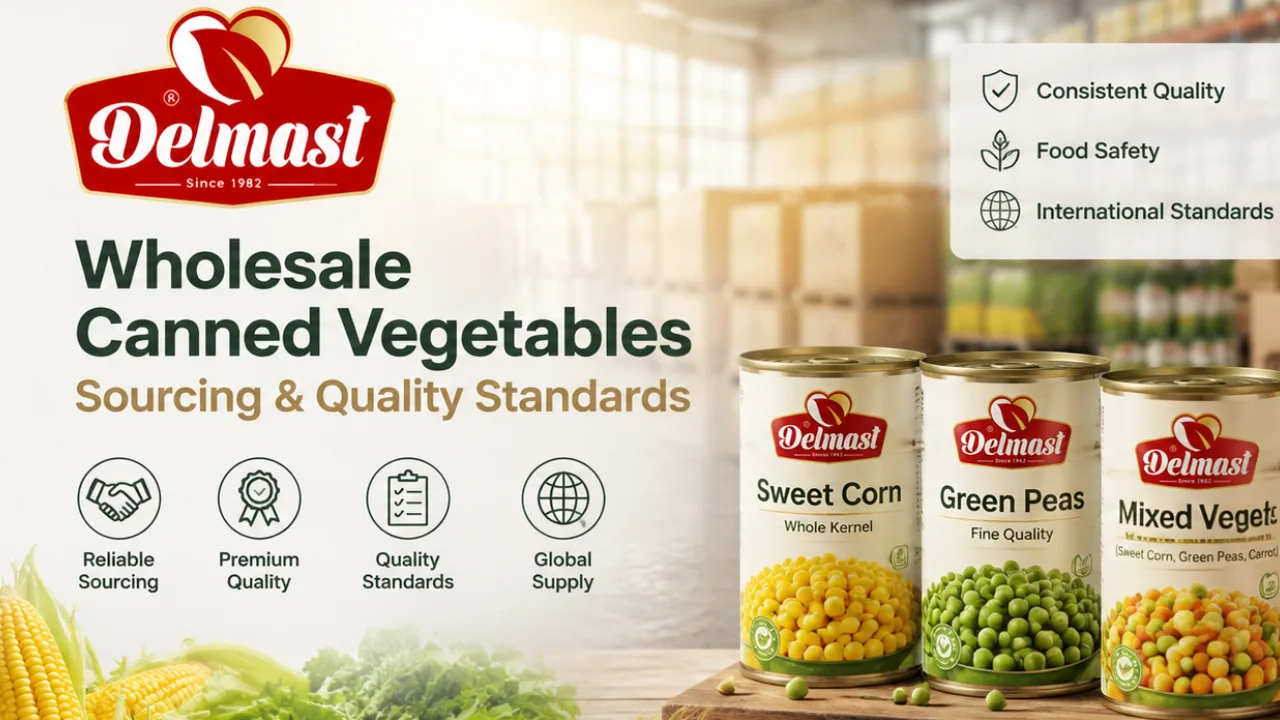
When you are managing procurement for a commercial kitchen, running a food distribution network, or stocking retail shelves on a large scale, the margin for error is razor-thin. I have spent years working alongside commercial buyers and supply chain managers, and if there is one lesson that stands out, it is this: finding a stable volume of stock is only half the battle. The real challenge—and what ultimately protects your brand reputation—is nailing the quality control process from the moment an order is placed to the day it hits your warehouse.
In this guide, we are breaking down what it truly takes to handle wholesale canned vegetables sourcing without running into the usual roadblocks of inconsistent textures, subpar raw ingredients, or fractured supply chains.
Why Standard Procurement Fails Without Strict Benchmarks
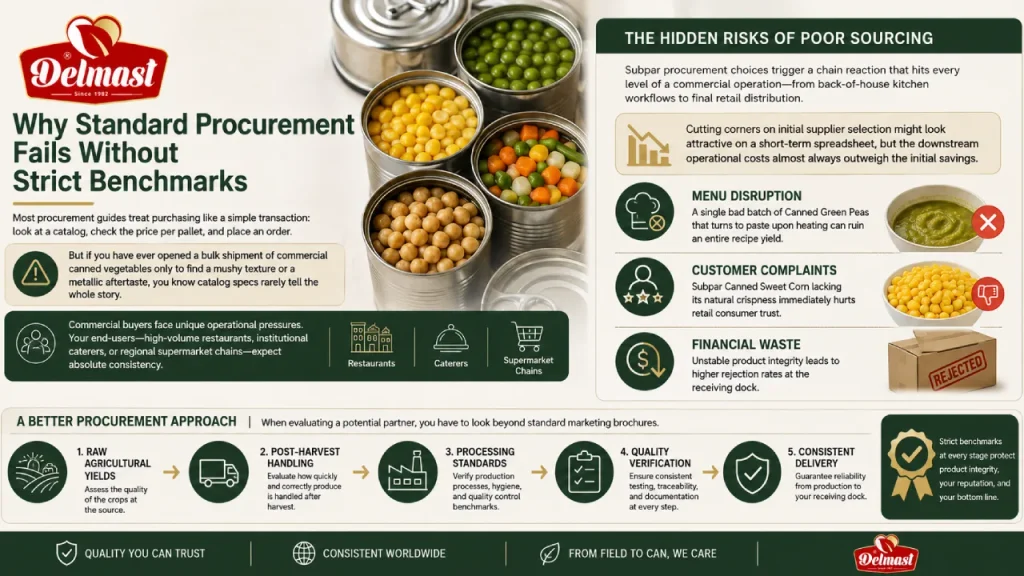
Most procurement guides treat purchasing like a simple transaction: look at a catalog, check the price per pallet, and place an order. But if you have ever opened a bulk shipment of commercial canned vegetables only to find a mushy texture or a metallic aftertaste, you know catalog specs rarely tell the whole story. Choosing the right wholesale canned vegetables manufacturer is essential for maintaining product quality and consistency across bulk orders.
Commercial buyers face unique operational pressures. Your end-users—high-volume restaurants, institutional caterers, or regional supermarket chains—expect absolute consistency.
The Hidden Risks of Poor Sourcing
Subpar procurement choices trigger a chain reaction that hits every level of a commercial operation—from back-of-house kitchen workflows to final retail distribution. Cutting corners on initial supplier selection might look attractive on a short-term spreadsheet, but the downstream operational costs almost always outweigh the initial savings.
- Menu Disruption: A single bad batch of Canned Green Peas that turns to paste upon heating can ruin an entire recipe yield.
- Customer Complaints: Subpar Canned Sweet Corn lacking its natural crispness immediately hurts retail consumer trust.
- Financial Waste: Unstable product integrity leads to higher rejection rates at the receiving dock.
When evaluating a potential partner, you have to look beyond standard marketing brochures. You need a framework that evaluates how raw agricultural yields are handled right after harvest.
Navigating the Quality Checklist for Bulk Canned Foods
To make sure your bulk purchases meet high-tier commercial requirements, your evaluation checklist needs to focus on specific, measurable criteria. Let’s break down the critical benchmarks that separate mediocre suppliers from reliable industry leaders.
1. Raw Material Grading and Harvest Timing
The quality of any canned product is dictated within hours of harvesting. Top-tier agricultural producers schedule harvesting at the absolute peak of maturity.
- Farm-to-Factory SpeedProcessing green peas or sweet corn even a day too late results in a loss of natural sugars. Always verify farm-to-factory turnaround times.
- Varietal SelectionNot all agricultural crops handle thermal processing well; suppliers must use specific canning-grade cultivars designed to retain structural integrity.
2. Thermal Processing and Preservation Integrity
The thermal sterilization phase is where many low-cost suppliers fail.
- Cellular Collapse: Over-processing destroys the cellular structure of delicate produce like Canned Sliced Mushroom or tender legumes, leading to a limp mouthfeel.
- Sodium Balancing: Modern commercial processing requires precise pressure-cooking parameters that ensure long-term shelf life without leaning heavily on excessive sodium or artificial additives.
3. Brine and Liquid Clarity
When you crack open a bulk tin of Canned Mixed Vegetables or Canned Chickpeas, pay close attention to the suspension liquid.
Pro Tip from the Field: Heavy sedimentation, floating artificial particles, or cloudy, viscous brines are immediate red flags indicating poor washing protocols or improper blanching phases prior to canning.
Essential Product Categories in Modern Food Distribution
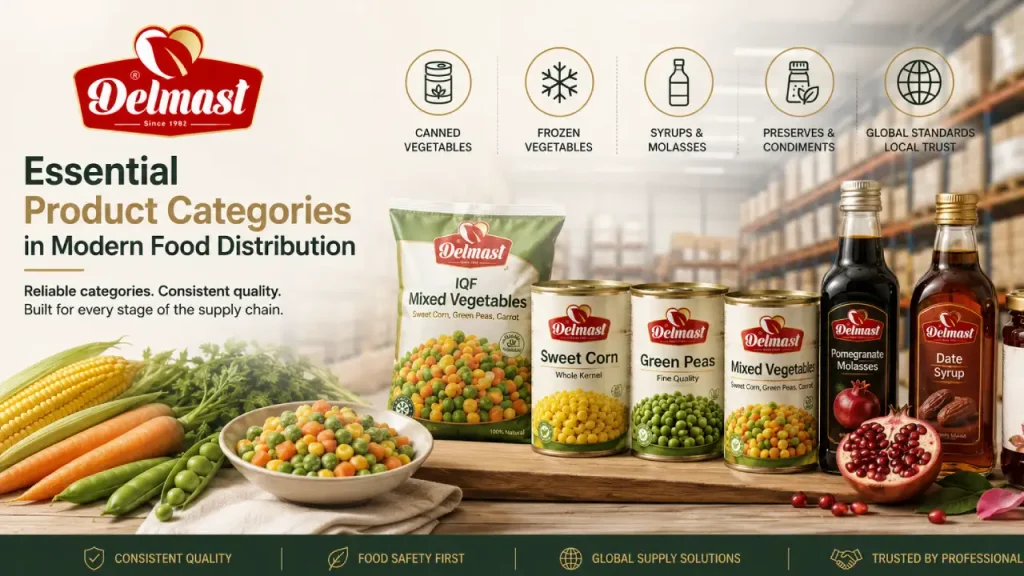
Commercial catalogs are diverse, and understanding the specific behavioral traits of different vegetables helps streamline your purchasing decisions. Here is how core categories stack up in high-volume applications:
| Product Category | Primary Commercial Use Case | Key Quality Indicator |
| Canned Sweet Corn | Salad bars, frozen meal manufacturing, ready-to-eat sides | Uniform kernel size, bright golden hue, crisp bite |
| Canned Green Peas | Catering operations, pot pies, vegetable medleys | Vibrant green color, intact skins, sweet flavor profile |
| Canned Mixed Vegetables | Institutional feeding, soup production, quick-service restaurants | Balanced volumetric ratio, even cube cuts on root veggies |
| Canned Chickpeas | Hummus production, salad bowls, plant-based menu concepts | Smooth outer skin, firm interior texture, nutty aroma |
| Canned Sliced Mushroom | Pizzerias, pasta sauces, food service toppings | Uniform slice thickness, clean earthy flavor, minimal bruising |
Managing these varieties efficiently requires partnering with an established Wholesale Canned Vegetables Manufacturer that understands how to scale production across diverse agricultural yields throughout the year.
Assessing Supply Chain Reliability and Global Export Realities
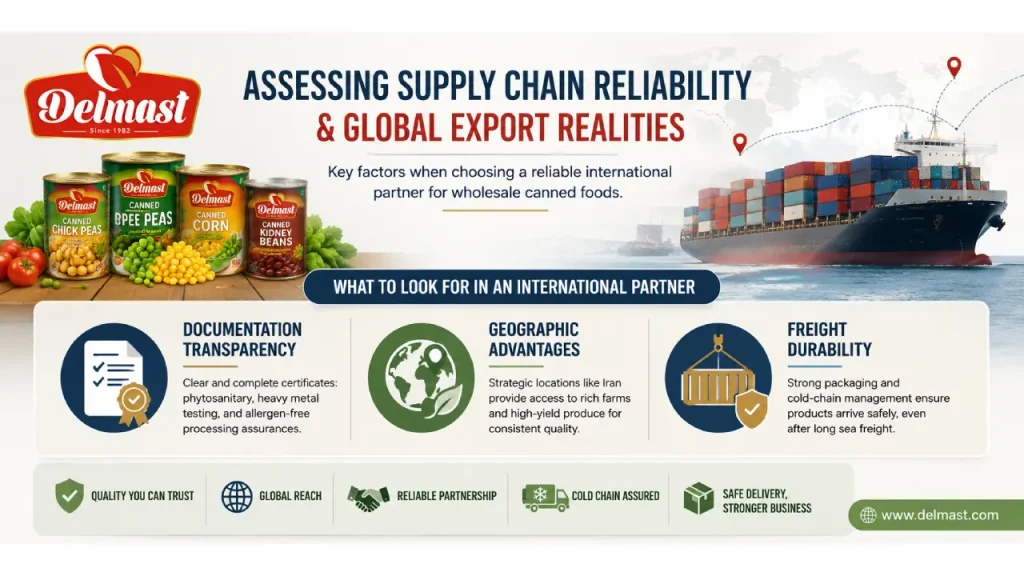
Sourcing wholesale canned foods internationally introduces a new layer of complexity—logistics, customs clearance, seasonal price volatility, and container optimization.
What to Look for in an International Partner
Expanding your supply chain across borders introduces unique variables, from customs clearance to long-distance transit logistics. When you are vetting global partners to secure a steady inventory, you need to look beyond standard commercial offers and focus on core operational strengths:
- Documentation Transparency: A reliable Food Export Company will provide transparent documentation covering phytosanitary certificates, heavy metal testing, and allergen-free processing assurances.
- Geographic Advantages: Companies operating out of strategic agricultural corridors, such as a seasoned Iranian Food Export Company or a specialized Canned Vegetables Exporter, leverage unique geographic advantages to source high-yield produce directly from rich domestic farms.
- Freight Durability: Bridging the gap between local farming output and global B2B distribution requires robust cold-chain management and durable, export-grade steel tinning that survives long-distance maritime freight without denting or seam failure.
If you are currently mapping out your supply routes or looking to partner with a trusted Canned Food Supplier that integrates rigorous agricultural sourcing with global export capabilities, exploring established direct channels is essential. For comprehensive bulk options, a reliable Canned Vegetables Manufacturer like Delmast offers extensive commercial lines designed specifically to handle high-volume demands across international markets, ensuring your inventory remains steady regardless of seasonal shifts.
Smart Sourcing for Sustainable Commercial Growth
Ultimately, the success of your commercial food business rests on the silent reliability of your pantry shelves. When you stop looking at wholesale procurement as a simple race to the bottom on price and start treating it as an exercise in risk management and quality assurance, your entire operation transforms.
By prioritizing strict raw material grading, demanding absolute transparency from your chosen B2B Food Manufacturer, and locking in stable logistics partnerships with a proven B2B Food Supplier, you safeguard your brand from the volatility of unstable supply chains.
Take a close look at your current inventory workflows today. Are your suppliers giving you the consistency, documentation, and structural integrity your business demands? To explore robust product lines tailored for commercial distribution, you can browse our curated selection of Canned Vegetables, designed specifically to meet high-volume operational standards.
Frequently Asked Questions (FAQs)
Minimum order quantities typically depend on the specific product line, packaging type, and destination port requirements. Most established export manufacturers work with pallet-load or container-load minimums to ensure cost-effective maritime or ground logistics for commercial buyers.
Reliable manufacturers partner directly with regional agricultural networks across diverse micro-climates. This multi-region sourcing strategy, combined with strict post-harvest processing within hours of picking, ensures uniform texture, color, and nutritional profile year-round.
Yes. Many commercial food manufacturers and exporters offer private label (OEM) solutions, allowing distributors and retail brands to customize tin lithography, packaging sizes, and labeling to match their specific market requirements.
Always verify that your supplier operates under internationally recognized food safety management systems. Essential standards include HACCP, ISO 22000, and FDA compliance, which guarantee strict hygienic control from raw material intake to final hermetic sealing.
One thought on “Guide to Importing Bulk Canned Vegetables for Foodservice”