

 Jam
 Pickles
 Canned Vegetable
 Syrups
 Vinegar
 IQF Vegetables
 IQF Fruits
 Fruit Strip
 Iranian Foods
Best Fruits for Making Premium Commercial Jam | Guide

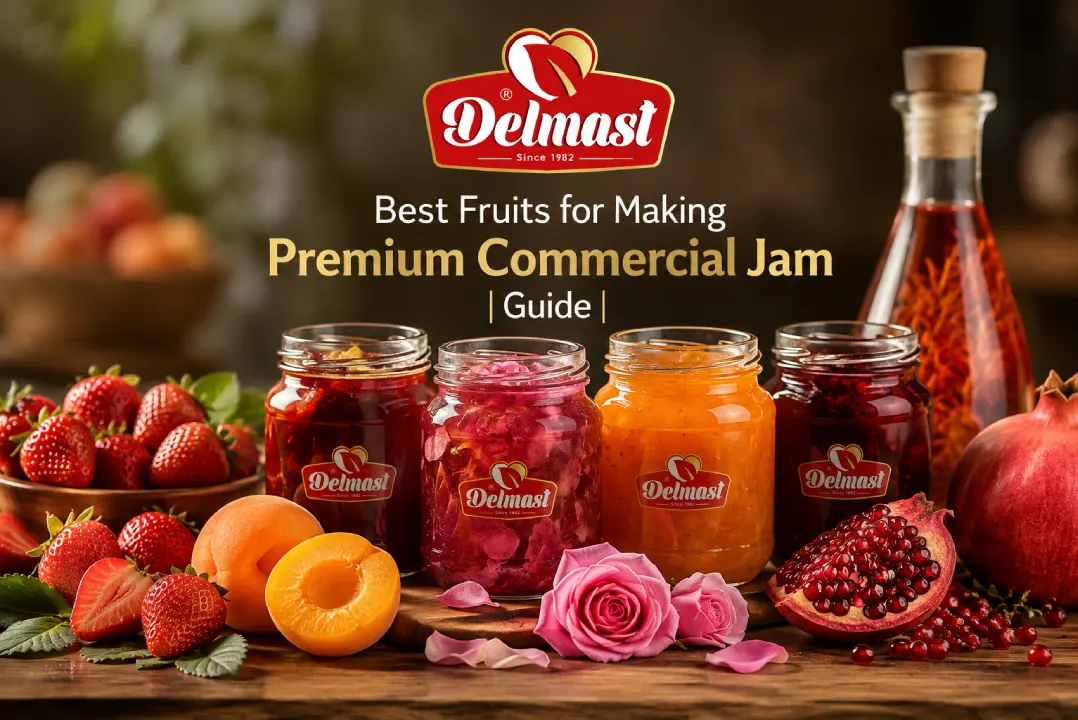
When commercial food processing facilities, private label brands, and industrial bakeries formulate high-grade fruit spreads, selecting the correct botanical inputs is the foundation of product success. Understanding the Best Fruits for Making Premium Commercial Jam requires analyzing more than just surface flavor profiles. Industrial food scientists and procurement directors must evaluate critical physiological characteristics, including natural pectin content, soluble solids distribution (degrees Brix), active organic acid ratios (pH), and thermal degradation resistance during high-temperature cooking and retorting.
Whether you are scaling production lines for institutional catering, supplying high-volume hotel breakfast buffets, or launching a retail line through an experienced Private Label Jam Manufacturer, choosing the optimal fruit variety dictates gel set stability, commercial shelf life, and consumer brand loyalty. This comprehensive technical guide breaks down the science of fruit selection, pectin dynamics, and commercial processing benchmarks.
Commercial Chart: Fruits Highest in Pectin & Acidity for Jam Manufacturing
| Fruit Category | Examples & Characteristics |
|---|---|
| High-Pectin Fruits (Natural Gel Set) | Sour Apples, Quince, Citrus Peels (Orange Marmalade), Sour Plums & Cranberries (pH 2.8–3.3) |
| Medium-Pectin Fruits | Apricots, Sour Cherries, Blackberries & Unripe Figs (Balanced Brix-to-Acid Ratio) |
| Low-Pectin Fruits (Require Pectin/Acid Boost) | Strawberries, Peaches, Pears, Carrots & Rose Petals (Formulated with Commercial Citrus/Apple Pectin) |
| Delmast B2B Supply Options | Private Label Jam, Bulk IQF Fruits & Industrial Bakery Fillings |
The Science of Fruit Selection: Pectin, Acid, and Sugar Ratios
The fundamental chemistry of fruit preserve manufacturing relies on a precise balance between fruit solids, sugar, acid, and pectin. Without an optimal equilibrium, jams fail to set properly, resulting in syneresis (weeping) or crystallization during ambient storage.
Natural Pectin Content and Gelling Behavior
Pectin is a structural heteropolysaccharide found in plant cell walls. During thermal processing, fruit cell walls break down, releasing natural pectin into the sugar-acid matrix.
- High-Pectin Fruits: Fruits naturally rich in protopectin—such as sour cherries, bitter oranges, and specific apple varieties—require minimal or no commercial gelling additives to achieve a firm spreadable matrix.
- Low-Pectin Fruits: Strawberries, raspberries, and figs possess low native pectin levels. When utilizing these popular varieties, industrial processors must supplement the formulation with standardized commercial fruit or citrus pectin to maintain structural integrity under mechanical pumping and dosing lines.
Acid Profiles and Inversion Control
Natural fruit acids (primarily citric, malic, and tartaric acid) lower the $pH$ of the preserve to the optimal gelling range (between 3.0 and 3.5). This acidic environment neutralizes the negative electrical charges on pectin molecules, allowing them to cross-link and form a stable gel network. Furthermore, optimal pH prevents sugar crystallization and inhibits microbial growth, directly answering operational queries regarding How Long Does Jam Last under ambient warehouse conditions (typically guaranteed for 24 months when hermetically sealed).
Evaluating Core Fruit Varieties for Commercial Processing
Different fruits behave uniquely under industrial cooking conditions, requiring specialized handling, enzyme deactivation, and sugar balancing.
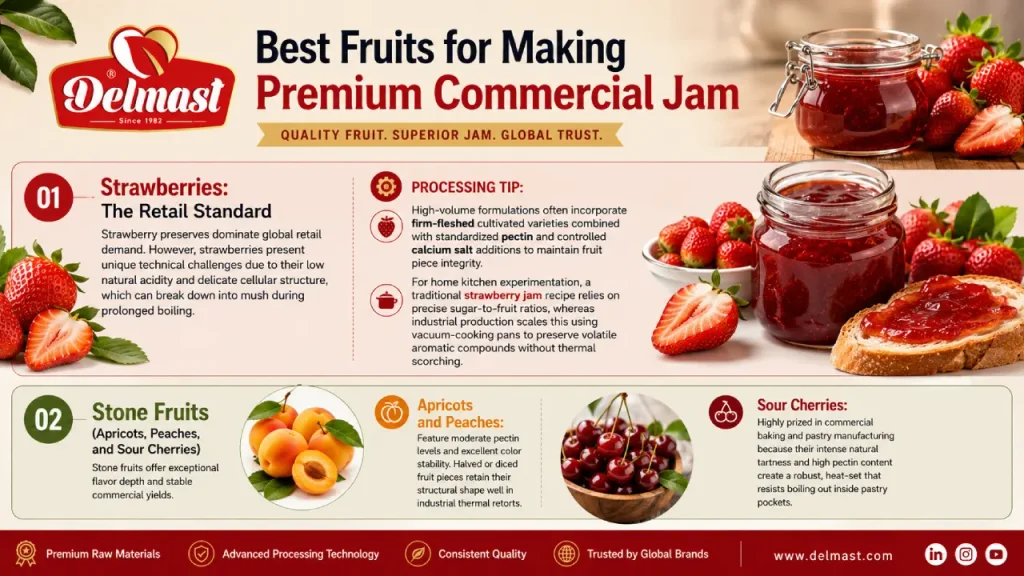
Strawberries: The Retail Standard
Strawberry preserves dominate global retail demand. However, strawberries present unique technical challenges due to their low natural acidity and delicate cellular structure, which can break down into mush during prolonged boiling.
- Processing Tip: High-volume formulations often incorporate firm-fleshed cultivated varieties combined with standardized pectin and controlled calcium salt additions to maintain fruit piece integrity. For home kitchen experimentation, a traditional strawberry jam recipe relies on precise sugar-to-fruit ratios, whereas industrial production scales this using vacuum-cooking pans to preserve volatile aromatic compounds without thermal scorching.
Stone Fruits (Apricots, Peaches, and Sour Cherries)
Stone fruits offer exceptional flavor depth and stable commercial yields, making them valuable ingredients for jam manufacturers and food processors sourcing wholesale apricot jam and other fruit-based products.
- Apricots and Peaches: Feature moderate pectin levels and excellent color stability. Halved or diced fruit pieces retain their structural shape well in industrial thermal retorts.
- Sour Cherries: Highly prized in commercial baking and pastry manufacturing because their intense natural tartness and high pectin content create a robust, heat-set texture that resists boiling out inside pastry pockets.
Comparative Matrix of Commercial Jam Fruit Characteristics
To assist food technologists and procurement managers in evaluating raw material inputs, the reference table below outlines key operational metrics across major fruit categories:
| Fruit Category | Natural Pectin Level | Target Brix Range | Optimal Processing pH | Key Industrial Application |
| Sour Cherries | High | 65° – 68° | 3.2 – 3.4 | Bakery fillings, pastry toppings |
| Strawberries | Low | 65° – 67° | 3.4 – 3.6 | Retail spreads, breakfast HoReCa |
| Apricots | Moderate | 65° – 68° | 3.3 – 3.5 | Confectionery filling, table jams |
| Oranges / Citrus | Very High | 62° – 65° | 3.0 – 3.2 | Marmalades, glaze bases |
| Mixed Berries | Low to Moderate | 65° – 68° | 3.3 – 3.5 | Industrial yogurt prep, bakery rolls |
Broadening Product Lines: Categorization and Recipe Distinctions
When establishing an industrial catalog, commercial buyers must distinguish between various preserve classifications. Understanding the Difference Between Jam, Jelly and Marmalade ensures accurate product labeling and compliance with international food standards:
- Jam: Made from crushed or chopped whole fruit boiled with sugar and pectin, featuring visible fruit tissue and dense spreadability.
- Jelly: Produced exclusively from clarified fruit juice and sugar, yielding a crystal-clear, firm gel free of suspended pulp or seeds (often governed by strict technical parameters when evaluating the ideal best fruit for jelly making).
- Marmalade: Specifically utilizes citrus fruits (such as Seville oranges or lemons), incorporating suspended citrus peel strips distributed uniformly throughout the gel matrix.
Industrial Sourcing and Manufacturing Integration
Sourcing raw fruit inputs or finished bulk preserves requires reliable supply chain execution. When scaling commercial operations, partnering directly with an established Bulk Jam & Syrup Supplier guarantees consistent Brix levels, verified microbial assay reports, and dependable seasonal availability.
For retail brands looking to expand without investing in capital-intensive cooking infrastructure, collaborating with a specialized Private Label Jam Manufacturer provides turnkey solutions—from custom fruit selection and brix balancing to multi-language retail packaging design. Furthermore, understanding broader agricultural categories helps procurement teams analyze general jam fruits and various types of jam fruit available across global export markets.
Quality Assurance and Pre-Production Protocols
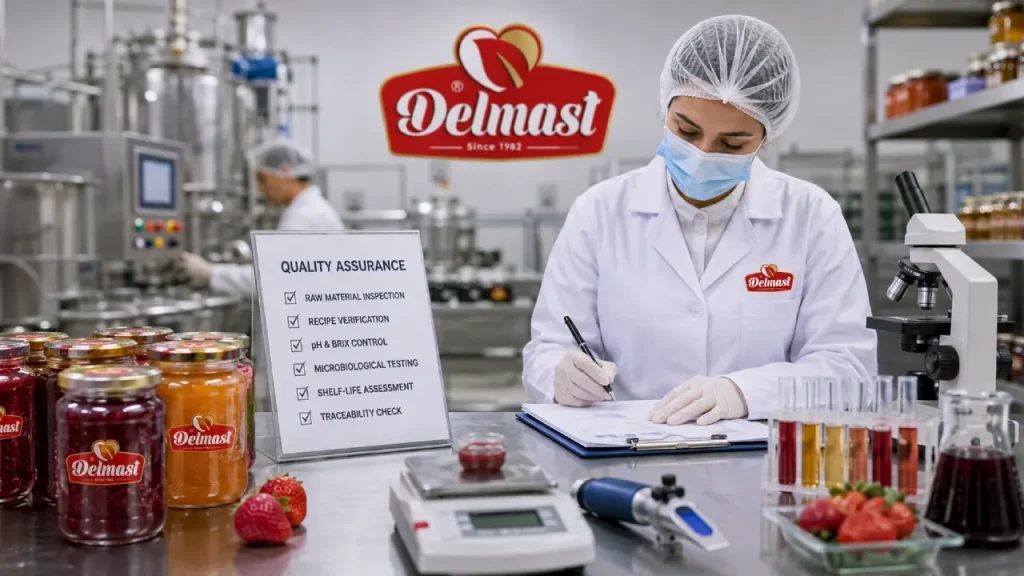
Before approving bulk purchase orders or committing to seasonal fruit supply contracts, quality assurance teams must enforce rigorous testing protocols:
- Brix Refractometry: Measuring soluble solids to ensure precise sugar concentration across every production batch.
- Microbial Assay Verification: Testing for osmophilic yeasts, molds, and lactic acid bacteria that could compromise seal integrity.
- Pesticide Residue Screening: Mandating comprehensive Certificates of Analysis (CoA) verifying full compliance with international Maximum Residue Limit (MRL) standards.
Strategic Fruit Sourcing for High-Yield Commercial Preserves
Optimizing the Best Fruits for Making Premium Commercial Jam directly impacts bottom-line processing yields and long-term brand equity in competitive retail and institutional markets. By marrying precise botanical selection—balancing natural fruit acidity, soluble solids, and protopectin dynamics—with professional co-manufacturing execution, your operations can eliminate batch failures, prevent thermal degradation, and deliver uncompromised flavor consistency across every production cycle.
One thought on “Best Fruits for Making Premium Commercial Jam | Guide”