

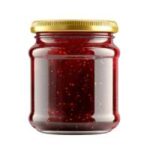
 Jam
 Pickles
 Canned Vegetable
 Syrups
 Vinegar
 IQF Vegetables
 IQF Fruits
 Fruit Strip
 Iranian Foods
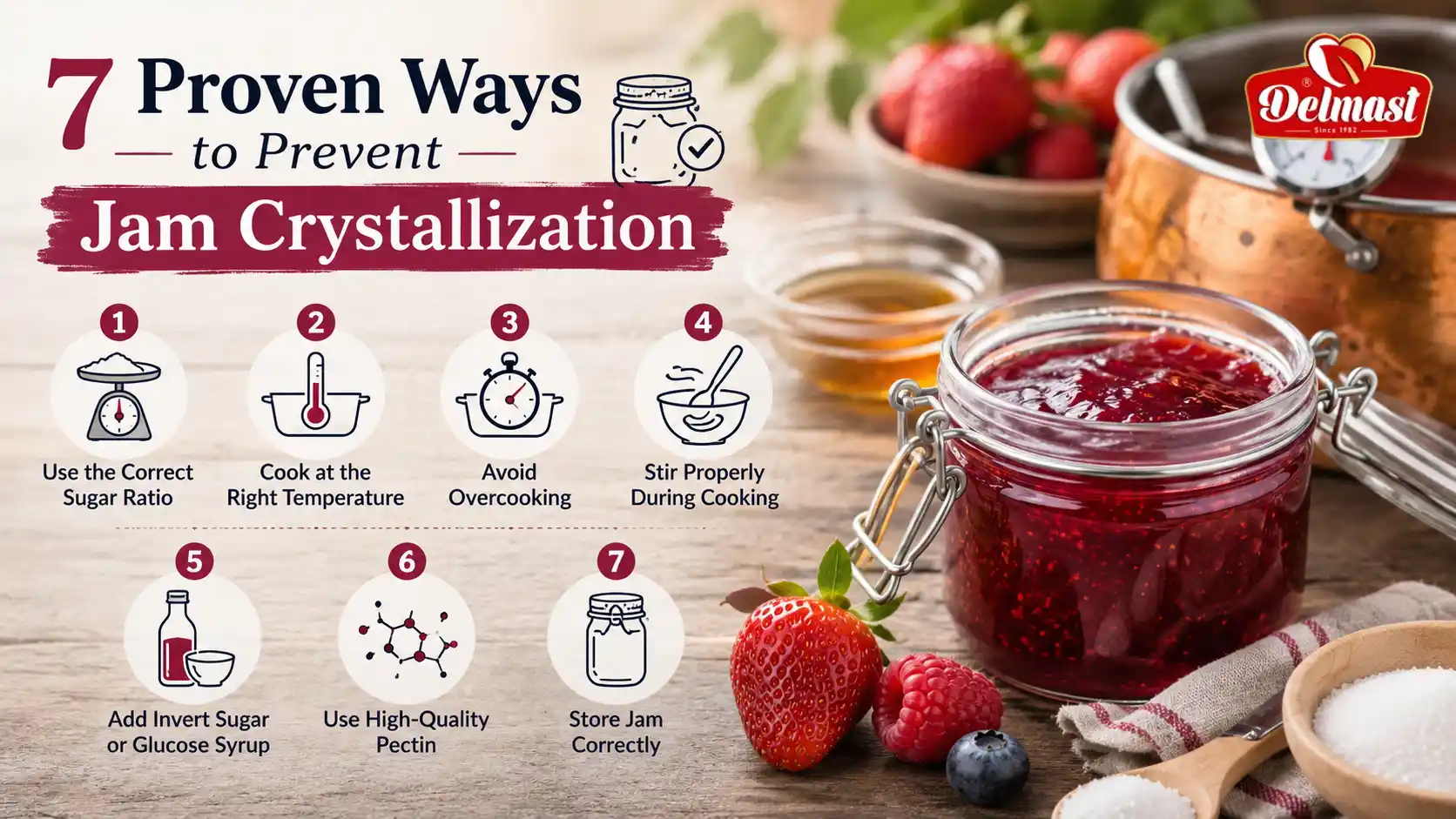
7 Proven Ways to Prevent Jam Crystallization

Crystallization of jam is one of the most frequent issues with both homemade and commercial jams. Despite all the correct ingredients and procedures followed in making the jam, jam can crystallize due to unfavorable conditions for storing it, including dampness, temperature changes, and insufficient sealing of the container. Not only does this process alter the texture of jam, but it may also decrease its visual and general quality. In this guide, you will learn how to avoid jam crystallization by following 7 tips that guarantee success.
| Prevention Method | Brief Explanation |
|---|---|
| Use the Correct Sugar Ratio | Maintaining the proper fruit-to-sugar ratio helps prevent excess sugar from crystallizing. |
| Cook at the Right Temperature | Reaching the correct endpoint temperature ensures the sugar dissolves completely. |
| Avoid Overcooking | Prolonged boiling increases water evaporation and raises the risk of crystal formation. |
| Stir Properly During Cooking | Gentle, consistent stirring distributes sugar evenly without encouraging crystal growth. |
| Add Invert Sugar or Glucose Syrup | These ingredients interfere with crystal formation and keep the texture smooth. |
| Use High-Quality Pectin | Proper pectin creates a stable gel that supports an even distribution of dissolved sugars. |
| Store Jam Correctly | Cool, dry storage conditions help maintain the jam's texture and reduce crystallization. |
1. Apply The Right Sugar Concentration to Avoid Jam Crystallization
One of the best ways to avoid Jam Crystallization is by using the right ratio of fruit, sugar, and water. Although sugar serves as a preservative and also gives taste, when there is too much sugar, the chances of crystals forming become higher. The right sugar concentration will ensure that it stays in solution for a long time.
Many people ask, What is Jam Crystallization? It is the process in which dissolved sugar molecules regroup into solid crystals, giving jam a rough, grainy texture instead of a smooth consistency. Following a tested recipe and accurately weighing ingredients is the first step toward preventing this problem.
2. Jam Cooked at the Right Temperature
Cooking temperature directly influences the dissolution capacity of sugar. Should the mixture fail to cook to the right setting point, then all sugar will not be dissolved. Cooking above the right temperature leads to removal of excessive water from the mixture, hence raising the sugar content above its critical level.
This is one of the primary Jam Crystallization Causes identified by food manufacturers. Using a candy thermometer or refractometer helps ensure the cooking process reaches the ideal endpoint without encouraging crystal formation.
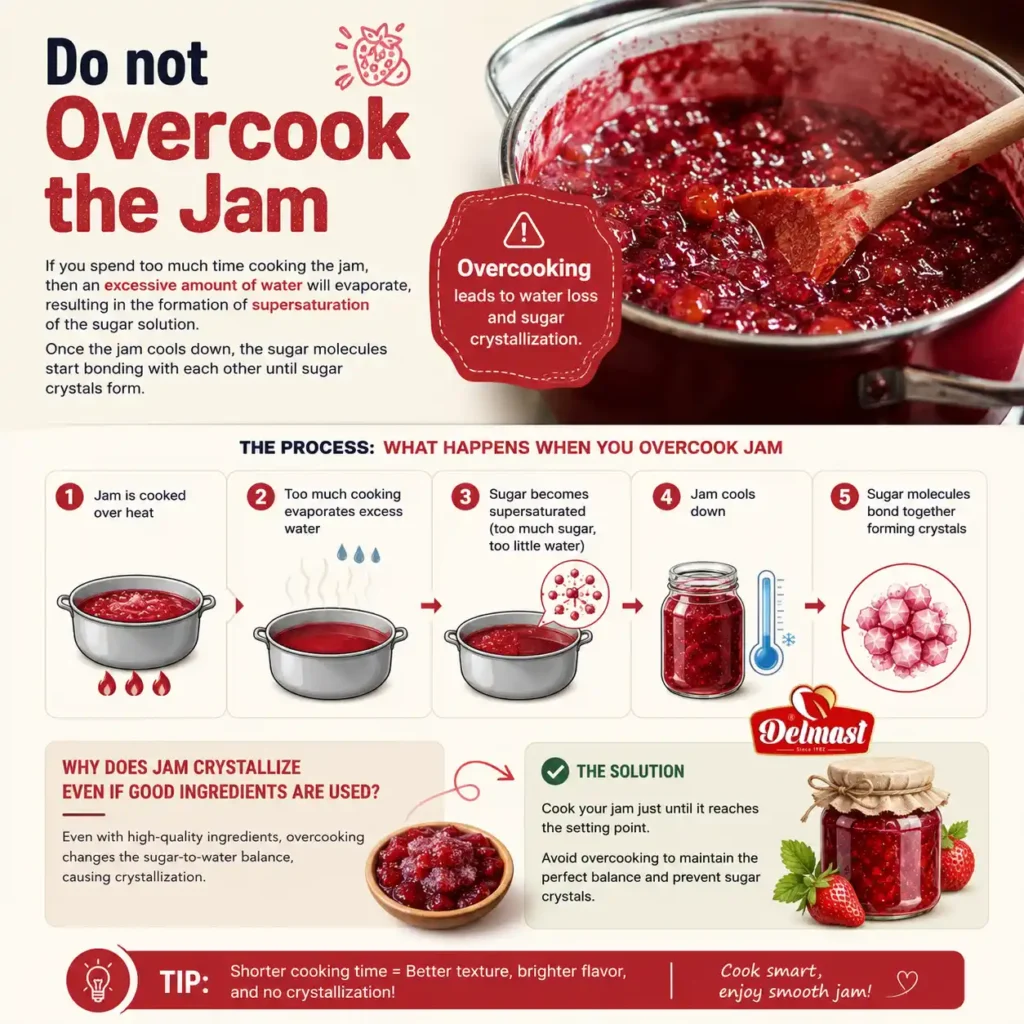
3. Do not Overcook the Jam!
If you spend a lot of time cooking jams like rose flower jam, then an excessive amount of water will evaporate, resulting in the formation of supersaturation of the sugar solution. Once the jam cools down, the sugar molecules start bonding with each other until sugar crystals form.
That is Why Does Jam Crystallize Even if Good Ingredients are Used.


Looking for Commercial-Grade Formulation & OEM Production? Preventing sugar crystallization at scale requires precise Brix monitoring, acidity control, and laboratory-tested pectin balance. As experienced 👉 private-label marmalade makers 👈 and commercial preserve manufacturers, Delmast delivers smooth, export-quality fruit jams tailored to your exact B2B specifications.
4. Mixing without Adding More Crystals
Proper mixing will help ensure that the sugar dissolves evenly, but stirring the crystals which may have formed on the sides of the pan into the mix could lead to the formation of more crystals.
Many people ask themselves Why Does Homemade Jam Crystalize After Cooling? In most instances, crystals that were added during cooking act as nuclei for further growth of crystals.
5. Proper Formation of Pectin Gel
The proper formation of gel will facilitate even dispersion of dissolved sugars within the jam. Failure to form the proper gel structure will allow moisture migration, leading to formation of regions with high concentrations of sugar, thus crystal formation.
Formation of Proper Pectin Gel Structure is very crucial both in terms of product quality and shelf life.
6. Proper Storage of Jam That Is Crystallizing
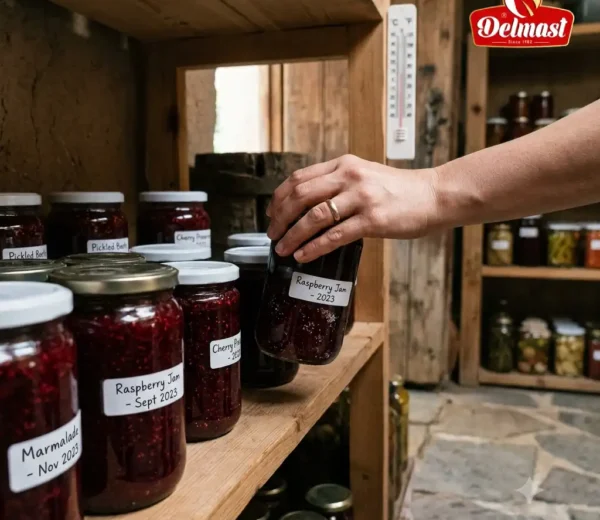
Temperature and moisture have a major impact on crystals formation. It is important that the jam is allowed to cool slowly and stored in a sealed container not exposed to sunlight and fluctuations in temperature.
Many consumers ask, Is crystallized jam safe to eat? In most cases, yes. Sugar crystallization is a quality issue rather than a food safety concern, provided the jar remains properly sealed and shows no signs of spoilage such as mold, fermentation, or off odors.
7. Best Practices During the Manufacturing Process
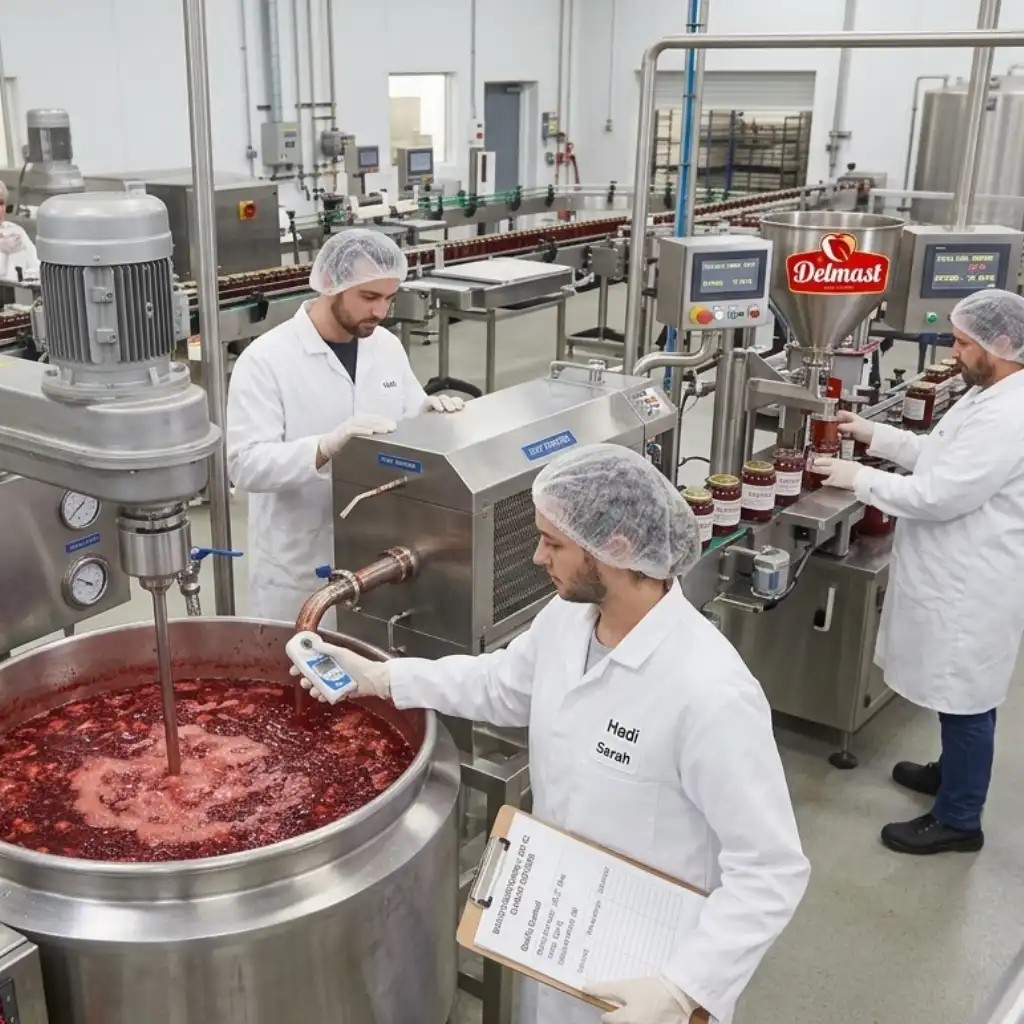
The commercial manufacture of Jam can minimize the chances of Sucrose Crystallization by closely monitoring the quality of ingredients, mixing, heat application, amount of soluble solids, and temperature during the filling process. All processes are controlled to ensure constant production quality.
During an Industrial Jam Production Process as well as a Jam Manufacturing Process, strict control of formulation and manufacturing parameters is the main way to produce non-crystallizing jams.
Sourcing Non-Crystallizing Bulk Jam, Bakery Fillings & Fruit for Industrial Processing
Delmast supplies bulk jam, marmalade, fruit paste and syrup solutions for bakeries, confectionery manufacturers and supermarket brands. As a reliable bulk jam and syrup supplier, we focus on consistent texture, flavour and product stability by carefully controlling the ratio of liquid glucose to sucrose, maintaining pH levels between 3.0 and 3.3, and targeting a Brix level of 65–68%. These parameters help minimise sugar crystallisation and maintain a smooth, uniform consistency suitable for industrial applications.
Our production capabilities support private-label jam makers seeking tailored formulations for retail products, bakery fillings and confectionery applications. We also work with IQF fruit for industrial processing to support fruit-based formulations and meet the requirements of commercial food production.
Ensure Jam Remains Smooth and Free From Crystals
It is much simpler to prevent the formation of crystals in jams than it is to rectify the situation once crystals have formed. This can be done by using the appropriate sugar content, cooking the jam at the right temperature, ensuring that the jam is not overcooked, and keeping it in suitable storage conditions. Regardless of whether you are making jams in your kitchen or manufacturing jams for commercial purposes, following these steps carefully ensures that the jam maintains a smooth consistency, great taste, and nice appearance.