

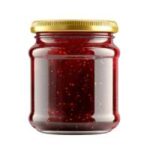
 Jam
 Pickles
 Canned Vegetable
 Syrups
 Vinegar
 IQF Vegetables
 IQF Fruits
 Fruit Strip
 Iranian Foods
How Long Does Jam Last? (Shelf Life Guide)

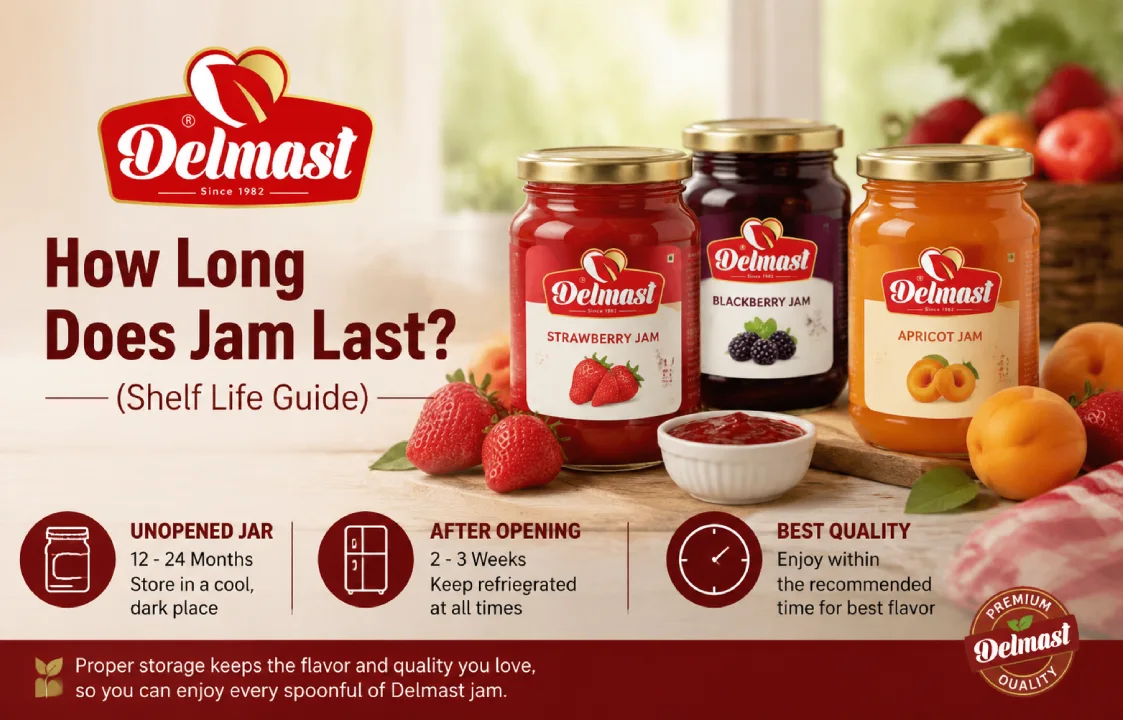
Jam is one of those pantry staples that many people keep at home for months or even years. But a common question remains: How Long Does Jam Last? The answer depends on whether the jar is opened or unopened, the ingredients used, and how it is stored. While commercially produced jams usually have a long shelf life because of sugar content and preservation methods, they still need proper handling to maintain quality and flavor.
| Jam Type | Shelf Life (Unopened) | Shelf Life After Opening |
|---|---|---|
| Commercial jam | 1–2 years past the production date | 1–3 months in the refrigerator |
| Homemade jam | Around 1 year when sealed properly | 2–4 weeks in the refrigerator |
| Low-sugar or organic jam | Usually shorter than regular jam | 2–4 weeks after opening |
Understanding How Long Does Jam Last helps prevent food waste and ensures you enjoy your jam while it still has the best taste, texture, and aroma.
How Long Does Unopened Jam Last vs. How Long Is Jam Good For After Opening?
Commercially sealed fruit jam and marmalade typically last 12 to 24 months unopened when stored in a cool, dark place. Once opened, jam usually stays fresh for 1 to 3 months in the refrigerator at 4°C. Low-sugar and artisan fruit spreads may last only 3 to 4 weeks after opening.
How Long Does Jam Last After Opening?
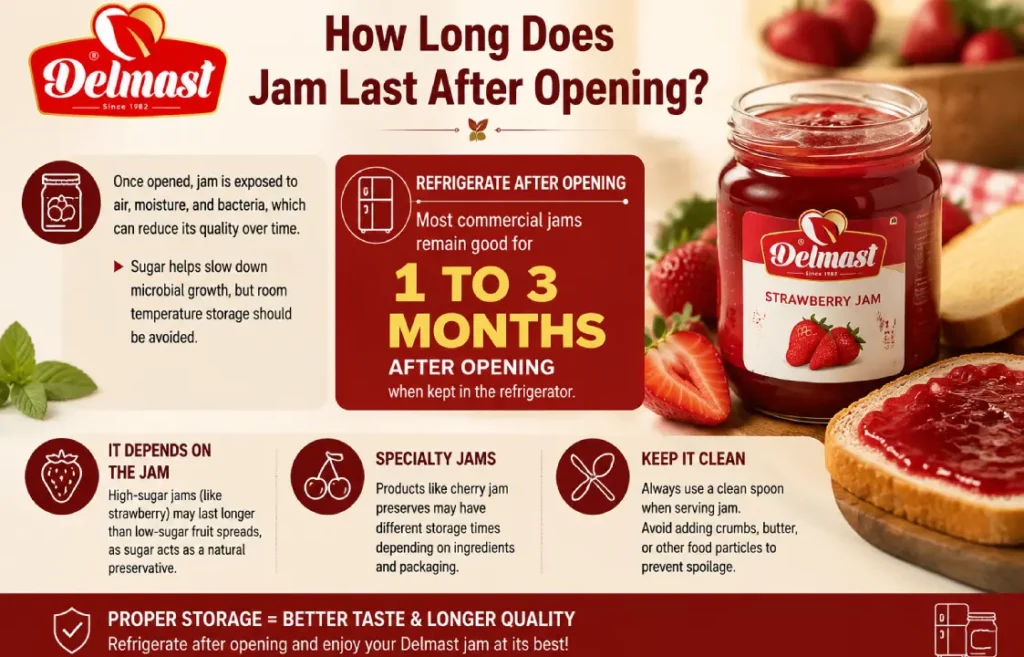
Once a jar of jam is opened, exposure to air, moisture, and bacteria can gradually reduce its quality. Even though sugar slows down microbial growth, opened jam should not be stored at room temperature for long periods.
Most commercial jams remain good for around one to three months after opening when kept in the refrigerator. However, the exact time can vary depending on the fruit, sugar level, and manufacturing process.
For example, a high-sugar strawberry jam may last longer than a reduced-sugar fruit spread because sugar works as a natural preservative. Specialty products such as cherry jam preserves may also have different storage recommendations depending on their ingredients and packaging.
Always use a clean spoon when serving jam. Introducing crumbs, butter, or other food particles into the jar can speed up spoilage.
How Long Does Jam Last Unopened?
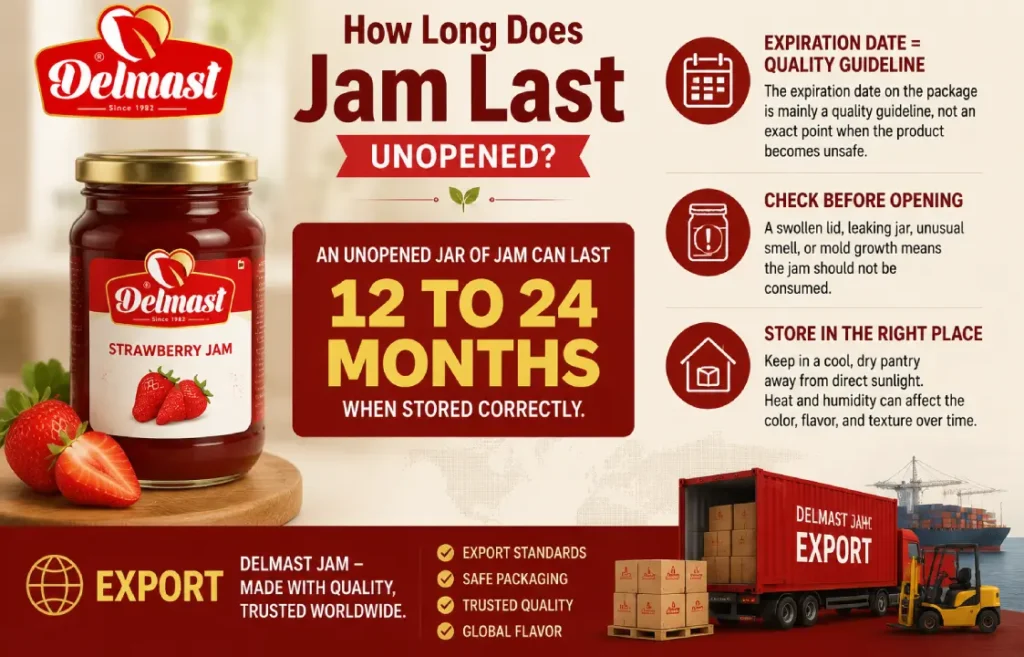
An unopened jar of jam can usually stay fresh for 12 to 24 months when stored correctly. The expiration date printed on the package is mainly a quality guideline rather than an exact point when the product becomes unsafe.
Before opening an old jar, check the condition of the packaging. A swollen lid, leaking jar, unusual smell, or mold growth indicates that the jam should not be consumed.
Storage conditions make a major difference. A cool, dry pantry away from direct sunlight is ideal. Heat and humidity can affect the color, flavor, and texture of jam over time.
Signs That Jam Has Gone Bad
Knowing How Long Does Jam Last is important, but checking the condition of the product is equally necessary. Sometimes jam can spoil earlier than expected because of poor storage or contamination.
Common signs of spoiled jam include:
- Mold growing on the surface
- Fermented or alcoholic smell
- Unusual bubbling inside the jar
- Change in color or texture
- Sour or unpleasant taste
If mold appears, removing the top layer is not enough. Mold can spread below the surface, so the safest choice is to discard the entire jar.
Sourcing Shelf-Stable Preserves for Your Brand? Achieving extended shelf life and consistent export quality requires industrial-grade pasteurization and vacuum-sealed packaging. Delmast specializes in 👉 wholesale private label jams and jellies 👈, supplying shelf-stable fruit preserves and jam for large scale retailing, international supermarkets, and foodservice distributors.
Does Refrigeration Make Jam Last Longer?
Yes, refrigeration significantly extends the shelf life of opened jam. Although many unopened jars can safely stay in a pantry, keeping opened jam in the refrigerator slows down spoilage and helps preserve freshness.
Some people store homemade varieties such as carrot jam or traditional fruit jams in the refrigerator immediately after preparation because they often contain fewer commercial preservatives.
Temperature control is especially important for homemade recipes. Products made with fresh fruit and lower sugar content usually have a shorter shelf life compared with industrially produced jams.
How Different Types of Jam Compare in Terms of Shelf Life
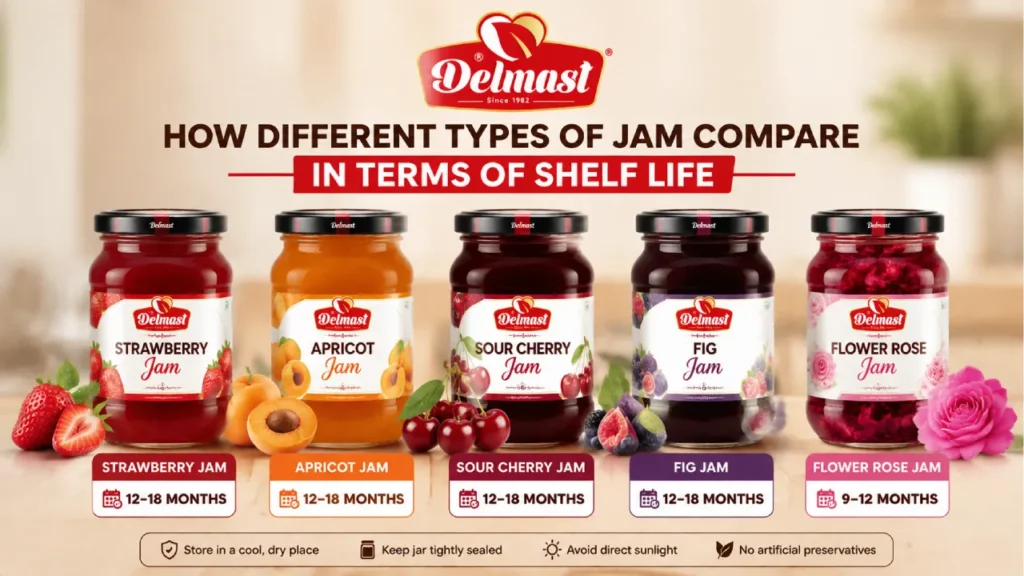
Different fruits naturally create different flavors, textures, and storage characteristics. For example, apricot jam is popular because of its smooth texture and balanced sweetness, while berry-based jams often contain more natural acidity.
A quality cherry jam usually has a rich fruit flavor and can remain stable for months when properly sealed. When looking to buy cherry jam, consumers often search for products with real fruit pieces and reliable preservation methods.
Traditional recipes also have unique characteristics. Specialty items like Rose’s jam and other roses jam products made from flower petals are known for their distinctive aroma and are often used in desserts and breakfast foods.
How Long Do Traditional and Specialty Jams Around the World Last?
Jam shelf life varies widely between countries depending on fruit types, sugar ratios, and traditional preparation methods.
In Iran, traditional recipes like Iranian carrot jam (often searched as Persian carrot jam) typically use a rich sugar syrup that acts as a natural preservative. When properly sealed, these home-style jams can last up to 1 year unopened and about 3 to 4 weeks in the refrigerator after opening.
Specialty flower-based spreads, such as jam rose, require careful storage because delicate petals can lose their floral aroma over time. They are best consumed within 1 to 2 months after opening.
For those monitoring ingredients, checking details like fig jam nutrition helps determine sugar levels—since higher sugar content generally means a longer shelf life, while lower-sugar specialty jams spoil much faster.
How Storage Affects Jam Quality
Even when jam is still safe to eat, poor storage can affect its overall quality. Over time, you may notice changes in texture, color, or flavor. A reliable Private Label Jam Manufacturer can also provide suitable packaging and storage recommendations to help preserve jam quality throughout its shelf life.
To keep jam fresh for as long as possible:
- Store unopened jars in a cool and dark place
- Refrigerate after opening
- Keep the lid tightly closed
- Avoid using wet or dirty utensils
- Do not freeze and repeatedly thaw jam
Following these simple steps helps maintain the original taste and prevents unnecessary waste.
Choosing High-Quality Jam Products
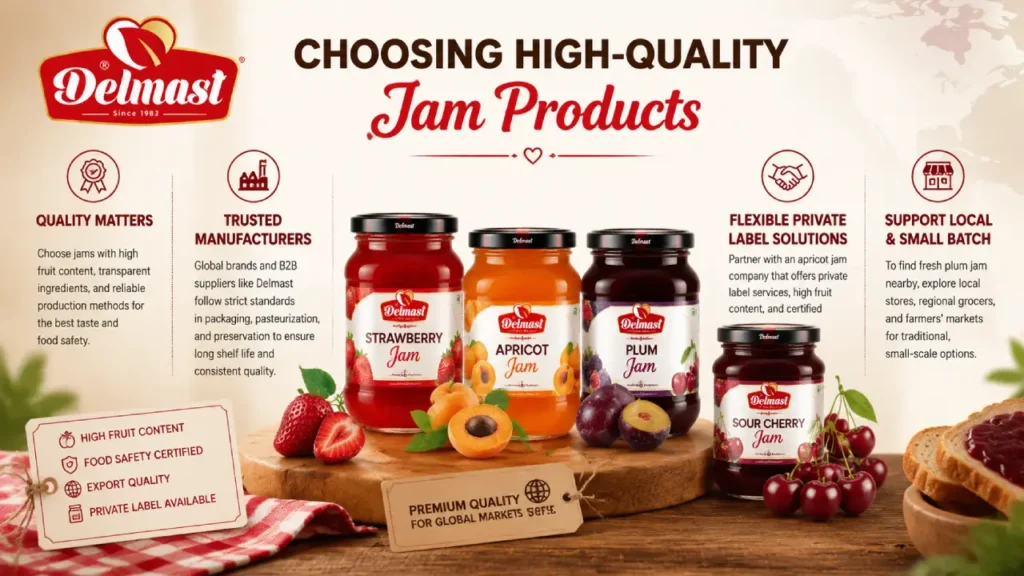
When buying jam, quality depends on several factors, including fruit percentage, production methods, and ingredient transparency. While some buyers prefer small-batch handmade spreads, others choose established commercial brands to ensure consistent shelf life and food safety.
Premium global manufacturers and B2B suppliers, such as Delmast, lead the market by producing a wide variety of high-quality jams for international export and private label services. As a reliable strawberry jam exporter, companies operating at this scale adhere to strict packaging, pasteurization, and preservation standards to ensure products remain stable and fresh during long-distance transportation.
Similarly, businesses and consumers searching for a reputable apricot jam company often look for partners that offer flexible private label manufacturing, high fruit content, and certified food safety practices.
On the other hand, if you are looking to find fresh plum jam nearby, local specialty stores, regional grocers, and farmers’ markets are great places to check for small-scale, traditional options.
Commercial Shelf-Life Specifications for Delmast Export Products
Delmast supplies international importers, private label retailers, and HORECA businesses with shelf-stable and frozen food products designed for commercial distribution. The following table outlines the standard shelf-life periods for key product categories under their recommended storage conditions.
| Product Range | Standard Shelf-Life Specification |
|---|---|
| Bulk Fruit Jams & Private Label Spreads | Up to 24 months when stored at ambient temperature (Private Label Jam & Marmalade) |
| Industrial Date Syrup (70–75% Brix) | Up to 24 months under ambient storage conditions (Bulk Date Syrup Supplier) |
| Sterilized Canned Mushrooms & Sweet Corn | Up to 36 months in retort-processed tin packaging (Canned Mushroom Market, Canned Sweet Corn) |
| IQF Frozen Vegetables & Produce | Up to 24 months when maintained at -18°C under an uninterrupted cold chain (IQF Vegetable Supplier) |
Actual shelf life may vary depending on product formulation, packaging specifications, and storage conditions. Export buyers should confirm the applicable shelf-life specifications for each product before placing an order.
How Long Does Jam Last? Key Takeaways for Proper Storage
So, How Long Does Jam Last? Most unopened commercial jams can remain good for one to two years, while opened jam usually lasts one to three months in the refrigerator. Homemade and low-sugar varieties often have shorter shelf lives because they contain fewer preservatives.
Proper storage, clean handling, and checking for signs of spoilage are the best ways to enjoy jam safely. Whether you prefer strawberry, cherry, apricot, rose, or traditional Persian varieties, understanding shelf life helps you protect both flavor and quality.
FAQ
Opened jam usually lasts about 1 to 3 months when stored properly in the refrigerator. Using a clean spoon and keeping the jar tightly closed can help maintain its quality and prevent contamination.
Yes, unopened jam can lose quality over time, but it often remains good for 12 to 24 months when stored in a cool, dry place. Always check the jar for signs of spoilage, such as a damaged lid, leakage, or unusual smell before consuming.
In many cases, unopened jam can still be safe to eat after the expiration date if it has been stored correctly and shows no signs of spoilage. However, the flavor, texture, and color may gradually change over time.
Yes, refrigeration is recommended after opening because it slows down spoilage and helps preserve the taste and texture of the jam. This is especially important for homemade or low-sugar jams with fewer preservatives.
Spoiled jam may show signs such as mold growth, a fermented smell, bubbling, unusual color changes, or an unpleasant taste. If you notice mold or a strange odor, it is best to discard the entire jar.