 Jam
 Pickles
 Canned Vegetable
 Syrups
 Vinegar
 IQF Vegetables
 IQF Fruits
 Fruit Strip
 Iranian Foods
Bulk Fruit Paste for Retail Brands: Industrial Fruit Puree, Concentrate & OEM Fruit Leather Supply

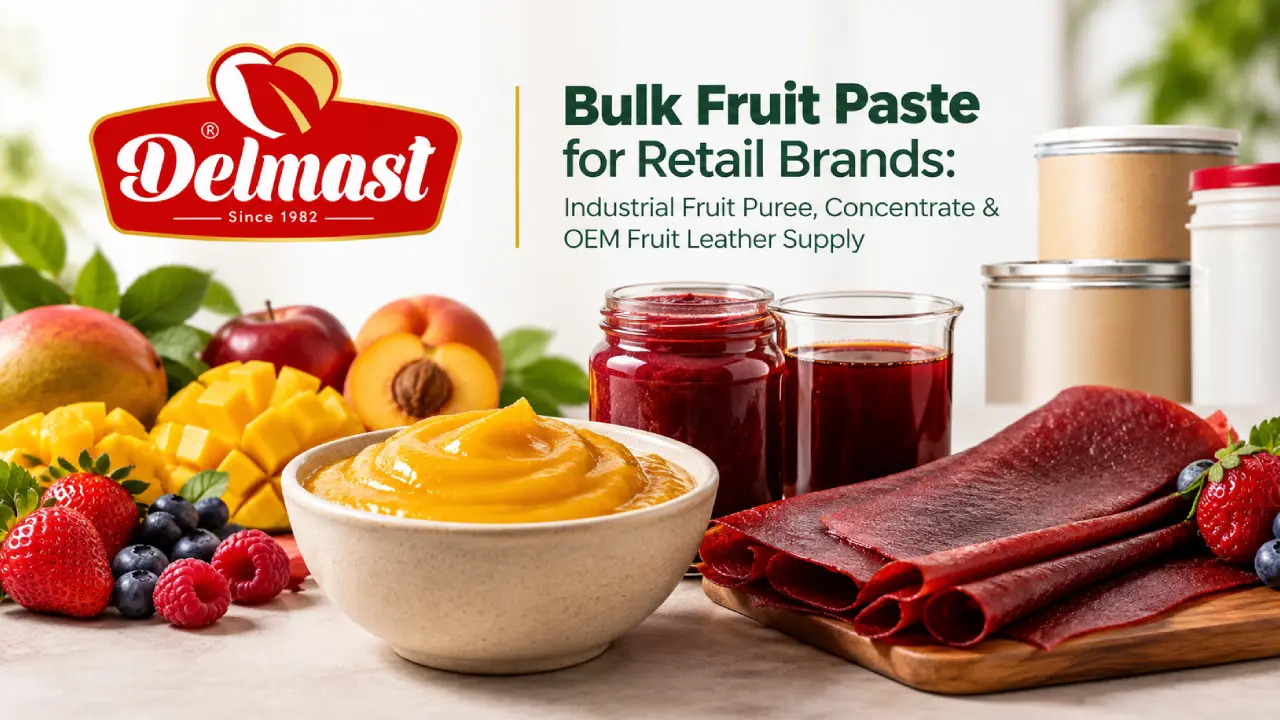
Retail brands and food manufacturers need consistent fruit ingredients that meet their formulation, production, and packaging requirements. Bulk fruit paste for retail brands provides a practical solution for companies producing fruit leather, bakery fillings, confectionery, jams, and fruit-based snacks. Delmast supplies fruit-based ingredients for B2B customers seeking export-ready products, flexible specifications, and customized manufacturing options.
As a food manufacturer and supplier, Delmast supports businesses looking for a reliable certified fruit roll manufacturer and a dependable source of fruit paste for their own production lines. From single-fruit formulations to blended recipes, bulk fruit paste can help simplify procurement and maintain consistency across production batches
Request Free 1kg Industrial Paste Sample & FOB Price List on WhatsApp
Sourcing Bulk Fruit Paste for Retail Brands & Food Manufacturers
Choosing the right fruit paste depends on the intended application, target market, processing equipment, and desired final texture. Retail brands often require a balance between natural fruit flavor, processing performance, shelf stability, and cost efficiency.
Working with an experienced industrial fruit puree supplier allows manufacturers to specify the characteristics their production process requires. These may include fruit variety, soluble solids, acidity, viscosity, color, and packaging format.
Concentrated Fruit Paste vs. Single-Strength Fruit Puree
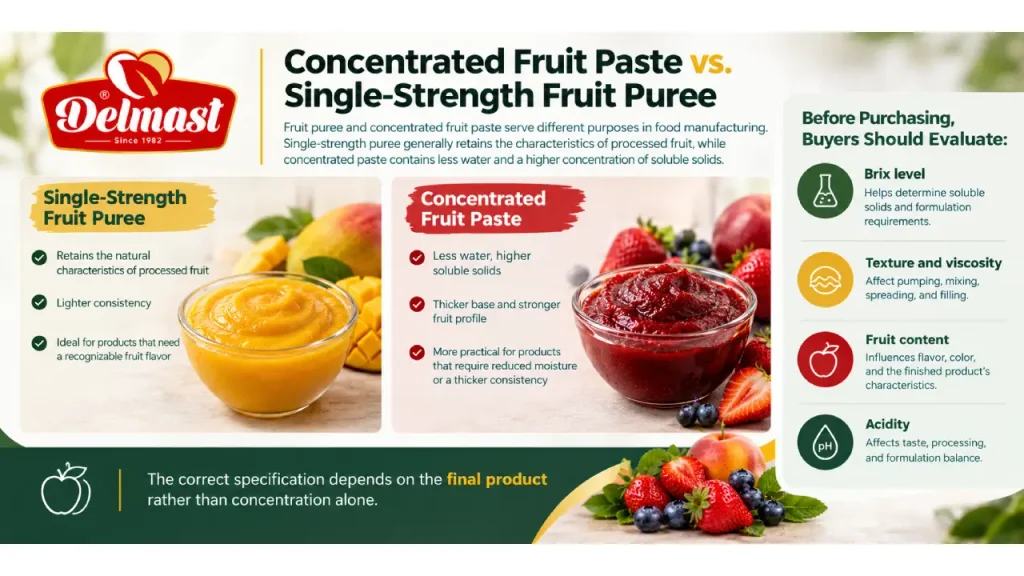
Fruit puree and concentrated fruit paste serve different purposes in food manufacturing. Single-strength puree generally retains the characteristics of processed fruit, while concentrated paste contains less water and a higher concentration of soluble solids.
Puree is suitable for products that require a recognizable fruit flavor and a softer consistency. Concentrated paste can be more practical when manufacturers need a thicker base, reduced moisture content, or a stronger fruit profile.
Before purchasing, buyers should evaluate:
- Brix level: Helps determine soluble solids and formulation requirements.
- Texture and viscosity: Affect pumping, mixing, spreading, and filling.
- Fruit content: Influences flavor, color, and the finished product’s characteristics.
- Acidity: Affects taste, processing, and formulation balance.
The correct specification depends on the final product rather than concentration alone, which is why an IQF fruit supplier for food manufacturers should understand the specific requirements of each application.
Core Fruit Varieties: Apple, Apricot, Sour Cherry, Plum, Date & Pomegranate Paste
Delmast can support B2B sourcing requirements across a range of fruit-based ingredients, including apple, apricot, sour cherry, plum, fig, date, mulberry, and multi-fruit blends, subject to product availability and specification.
Apple paste provides a mild flavor and versatile base for blended formulations. Apricot and sour cherry offer distinctive fruit profiles for snacks, fillings, and fruit leather. Plum paste contributes a rich taste, while date paste provides natural sweetness and a dense consistency.
Pomegranate-based formulations may suit products requiring a more pronounced sweet-and-sour profile. Buyers should confirm the available format, processing method, and technical specifications for each fruit before placing an order.
Industrial Applications: From Fruit Leather Brands to Bakery Fillings
Bulk fruit paste is used across multiple food categories because its texture and composition can be adapted to different manufacturing processes. Selecting the appropriate grade helps businesses reduce formulation adjustments and maintain consistent product characteristics.
Raw Material for Fruit Roll & Fruit Leather Brands
Fruit paste serves as a base ingredient for manufacturers producing fruit rolls, fruit strips, and other fruit-based snacks. A consistent raw material can help production teams achieve more predictable spreading, drying, cutting, and packaging results.
For every fruit leather brand, the ideal paste depends on the drying system, target moisture level, fruit content, and desired chewiness. A formulation designed for thin fruit sheets may require different viscosity and solids content from one intended for thicker or tubular products.
Delmast offers B2B sourcing options for businesses exploring wholesale fruit leathers and specialized formats such as tubular multi-fruit leather.
When evaluating a supplier, buyers should consider batch consistency, ingredient documentation, packaging compatibility, and the supplier’s ability to support repeat orders.
Heat-Stable Bakery Fillings, Confectionery & Dairy Mixes
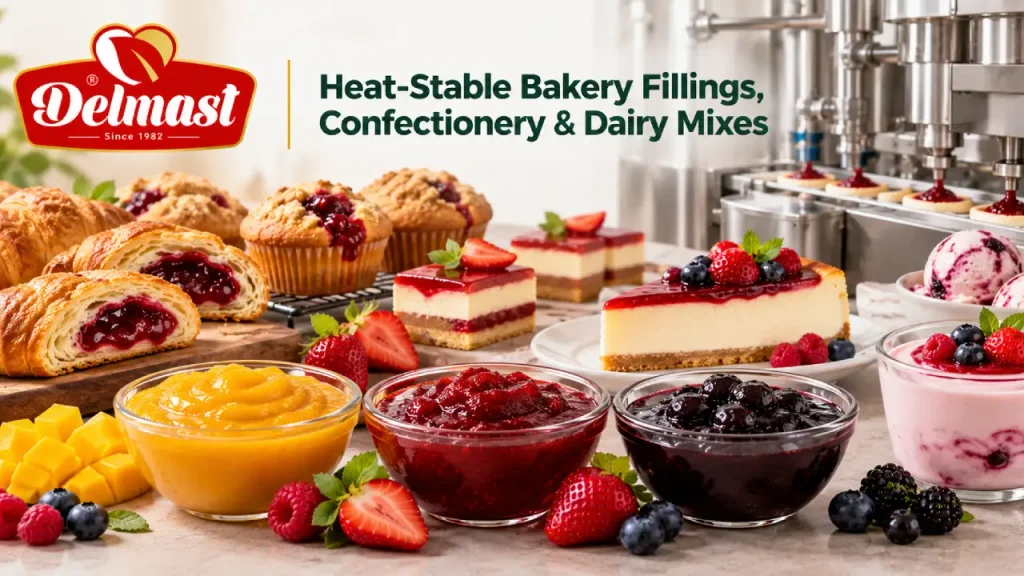
Fruit paste can be incorporated into bakery fillings, biscuits, pastries, confectionery, and selected dairy formulations. However, not every fruit paste is suitable for every process.
For baked goods, manufacturers should assess heat stability, moisture migration, acidity, and viscosity. A filling that is too fluid may leak during baking, while a paste with unsuitable solids content may become excessively firm or affect the finished product’s texture.
A specialized bakery fruit filling manufacturer or ingredient supplier can help identify suitable specifications for different applications. Fruit paste can also complement jam formulations, provided the ingredient composition meets the product’s intended requirements.
Businesses sourcing several fruit ingredients may also explore Delmast as a bulk jam and syrup supplier when coordinating procurement across related product categories.
Custom Fruit Recipe Development & Sugar-Free Formulations
Retail brands often need formulations that match their own nutritional positioning, flavor profile, and target market. Custom fruit recipe development allows buyers to define ingredient proportions and processing requirements before scaling production.
Options may include different fruit combinations, adjusted sweetness, controlled acidity, and texture modifications. Any changes should be validated against the product’s intended use and applicable food regulations.
Sugar-Free Fruit Leathers Manufacturing Plant Cost and OEM Co-Packing
Establishing a sugar-free fruit leathers manufacturing plant can involve significant investment in processing equipment, drying systems, utilities, food safety controls, packaging machinery, and quality assurance. Additional expenses may include facility construction, staffing, maintenance, and regulatory compliance.
For new and established retail brands, outsourcing production can reduce the initial infrastructure required to launch a product. Instead of building a complete manufacturing facility, businesses can evaluate two options: purchasing bulk fruit paste for their existing production line or discussing OEM and private-label production with a suitable manufacturing partner.
Delmast can discuss product development and manufacturing requirements with businesses seeking fruit-based products for their brands, subject to project feasibility and production capabilities.
The most suitable approach depends on expected order volumes, recipe ownership, packaging needs, and long-term production costs. Buyers should compare the total cost per finished unit rather than equipment costs alone.
Custom Brix Calibration, Acidity & Natural Pectin Control
Brix calibration helps manufacturers control soluble solids and achieve the required formulation characteristics. Acidity, measured through pH, is another important parameter affecting flavor and processing requirements.
Natural pectin also influences texture. Apples and certain other fruits are among the fruits high in pectin, although actual pectin content varies by variety, maturity, and processing method.
A suitable formulation may require adjustments to fruit proportions, concentration, or other permitted ingredients to achieve the desired consistency. Sugar-free products need particular attention because removing added sugar can change texture, sweetness, and processing behavior.
Before commercial production, manufacturers should conduct trials to verify the formulation under their actual processing and storage conditions.
B2B Export Packaging, Aseptic Drums & Shelf Life Specifications
Packaging selection affects transportation, storage, handling, and production efficiency. Bulk buyers should select a format compatible with their receiving facilities and processing equipment.
Aseptic fruit paste drums may be suitable for larger industrial orders, while food-grade pails and lined cartons can offer flexibility for different production volumes. Packaging specifications must be confirmed for each product, including filling conditions, liner materials, and storage requirements.
Technical & Export Specifications: Bulk Fruit Paste
| Specification | Available options or indicative range |
|---|---|
| Available fruit pastes | Apple, apricot, sour cherry, plum, fig, date, mulberry and multi-fruit blends |
| Brix and concentration | 32–38° Brix for selected puree/paste products; up to 65–70° Brix for selected concentrated products |
| Formulation options | Natural fruit formulations, no-added-sugar options, high-pectin bakery grades and custom sweet or sour profiles |
| Bulk B2B packaging | 220 L aseptic steel drums, 20–25 kg food-grade pails and 10 kg poly-lined cartons, subject to product availability |
| Quality and certifications | ISO 22000, HACCP and Halal documentation, as applicable to the specific product and facility |
| Shelf life | Indicative target of 18–24 months for suitable products under specified storage conditions |
These specifications are indicative rather than universal. Actual Brix levels, packaging formats, certifications, and shelf life depend on the fruit product, processing method, packaging integrity, and storage conditions. Buyers should request the current technical data sheet and applicable certificates before confirming an order.
For export shipments, the supplier and buyer should also agree on labeling, ingredient declarations, allergen information where applicable, country-specific requirements, shipping conditions, and documentation.
Partner with Delmast for Bulk Fruit Paste & Private Label Fruit Rolls
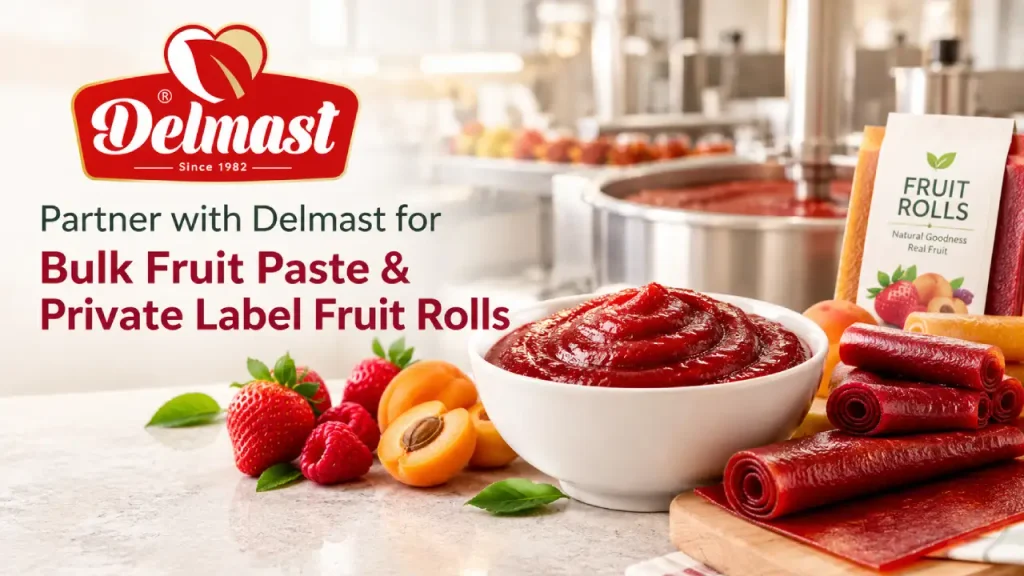
Finding the right bulk fruit paste for retail brands requires more than comparing prices. Buyers need consistent specifications, reliable communication, suitable packaging, and a clear understanding of how the ingredient will perform in production.
Delmast works with B2B customers exploring fruit-based ingredients and customized product requirements. Whether your business manufactures fruit leather, develops bakery fillings, supplies jam products, or plans a private-label fruit snack, the first step is to define the technical and commercial requirements.
When requesting a quotation, provide the following information:
- Required fruit variety and intended application.
- Target Brix, texture, acidity, and fruit content.
- Preferred packaging size and estimated order volume.
- Destination market and relevant compliance requirements.
- Whether you need bulk ingredients, recipe development, or private-label manufacturing.
These details help establish whether a standard product or a customized formulation is the better fit.
Contact Delmast to discuss bulk fruit paste sourcing, export packaging, and potential OEM opportunities for your retail brand. Request current specifications, minimum order quantities, available fruit varieties, and pricing based on your target market and production needs.