

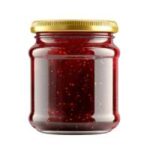
 Jam
 Pickles
 Canned Vegetable
 Syrups
 Vinegar
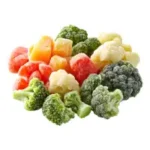 IQF Vegetables
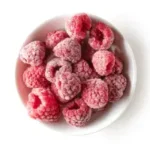 IQF Fruits
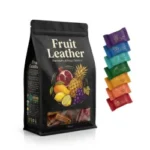 Fruit Strip
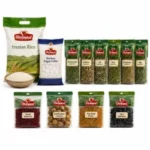 Iranian Foods
Difference Between Jam, Jelly and Marmalade: Explained

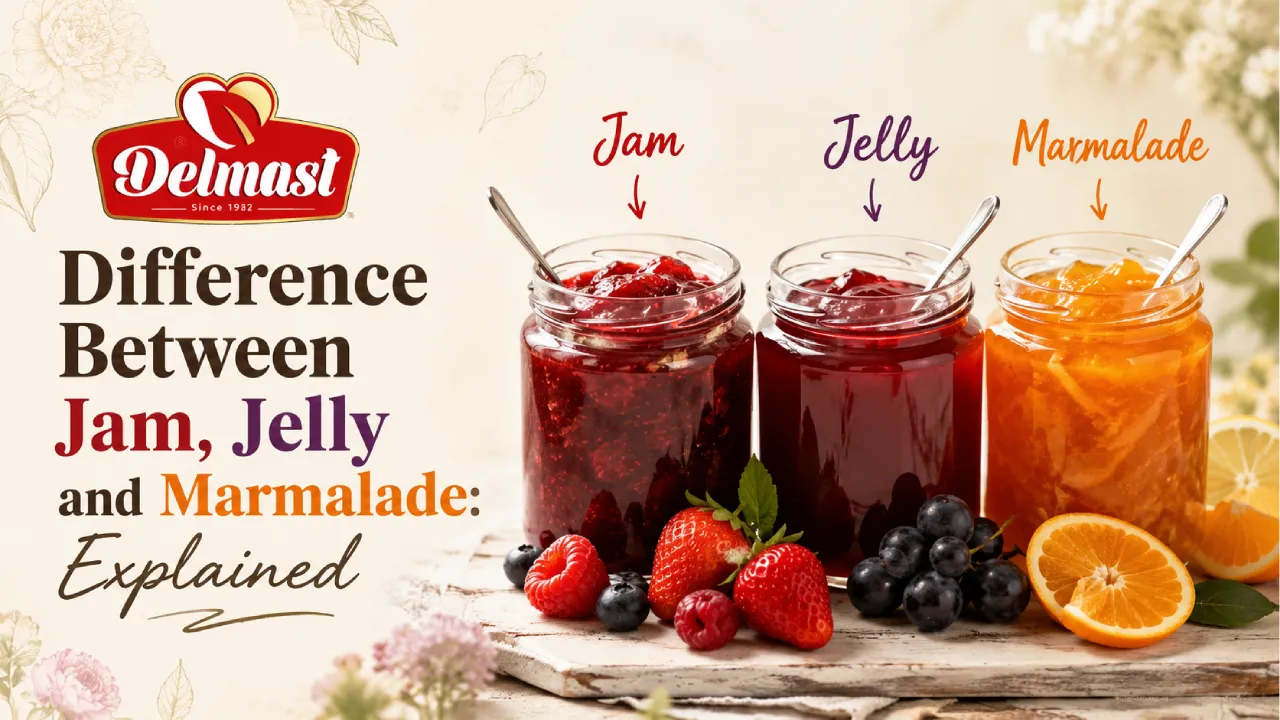
Jam, jelly, and marmalade are among the most popular fruit spreads enjoyed around the world. Although they may look similar, their ingredients, texture, production methods, and applications create important differences.
Understanding the Difference Between Jam Jelly and Marmalade helps consumers make better choices and allows food businesses, retailers, and distributors to select the right products for their customers.
| Product | Main Ingredients | Texture | Fruit Content | Production Method | Common Uses |
|---|---|---|---|---|---|
| Jam | Crushed fruit, sugar, pectin | Thick, soft texture with fruit pieces | High fruit content | Fruit is cooked with sugar until it reaches a spreadable consistency | Breakfast, bakery products, desserts, food service |
| Jelly | Fruit juice, sugar, pectin | Smooth, clear, and firm | Made from filtered fruit juice | Fruit juice is extracted, filtered, and set into a gel | Toast, sandwiches, desserts |
| Marmalade | Citrus fruit, peel, sugar, pectin | Gel-like texture with citrus peel pieces | Mainly citrus fruits | Citrus juice and peel are cooked together | Breakfast spreads, premium food products |
What Is the Difference Between Jam, Jelly and Marmalade?
The main Difference Between Jam Jelly and Marmalade comes from the part of the fruit used, the preparation process, and the final texture.
- Jam is made by cooking crushed or chopped fruits with sugar. Because the fruit pulp remains inside the product, jam usually has a thicker texture and a stronger natural fruit flavor.
- Jelly, on the other hand, is produced from fruit juice rather than whole fruit. The juice is filtered before cooking, creating a smooth, transparent product with a firm gel structure.
- Marmalade is a special type of fruit preserve traditionally made from citrus fruits such as oranges, lemons, or grapefruits. Unlike jam, marmalade includes pieces of citrus peel, which provide a distinctive texture and slightly bitter taste.
For consumers, the choice often depends on taste preference. For businesses, the decision depends on customer demand, market trends, packaging requirements, and the intended application.
How Is Jam Made and What Makes It Different?
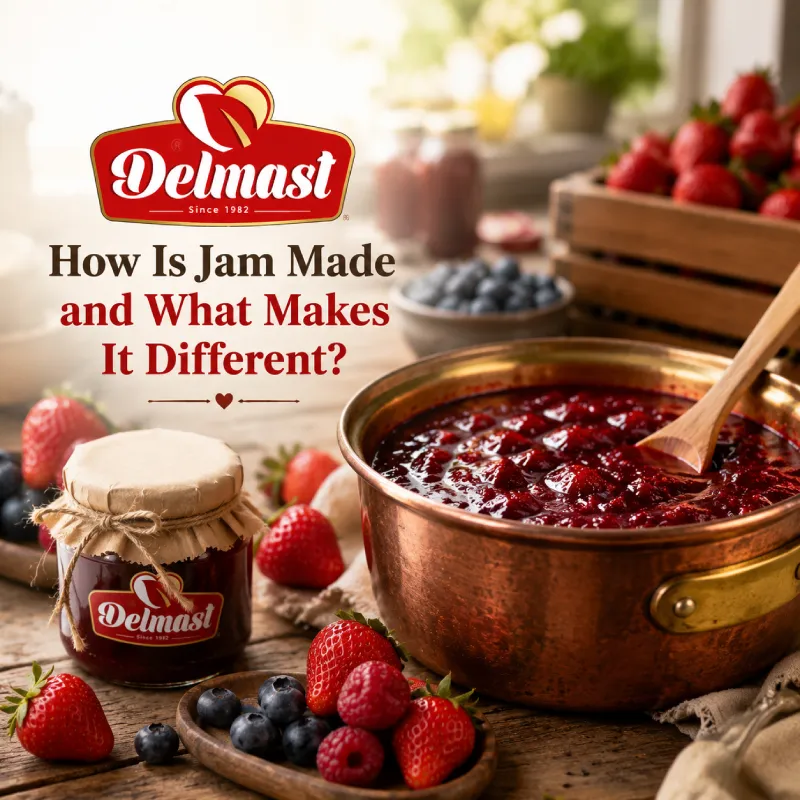
Jam production starts with selecting high-quality fruits that provide the desired flavor, color, and nutritional value. Fruits are cleaned, prepared, and cooked with sugar to create a thick spread.
Unlike jelly, jam keeps the natural fruit pulp, which gives it a more homemade appearance and richer mouthfeel. The amount of fruit used, cooking temperature, and balance between sweetness and acidity all influence the final quality.
A professional jam manufacturing process requires careful control of:
- Fruit quality and freshness
- Sugar concentration
- Pectin levels
- Cooking time and temperature
- Packaging conditions
Different fruits create different jam characteristics. Strawberry jam is known for its bright color and sweet flavor, while fig jam offers a deeper taste and unique texture. Buyers interested in nutritional details often search for information such as fig jam nutrition to compare ingredients and product value.
For retailers and food businesses, jam is a versatile product because it can be supplied in various formats, including single-serve portions, glass jars, and bulk packaging for bakeries, hotels, and restaurants.
What Is Jelly and Why Is Its Texture Different?
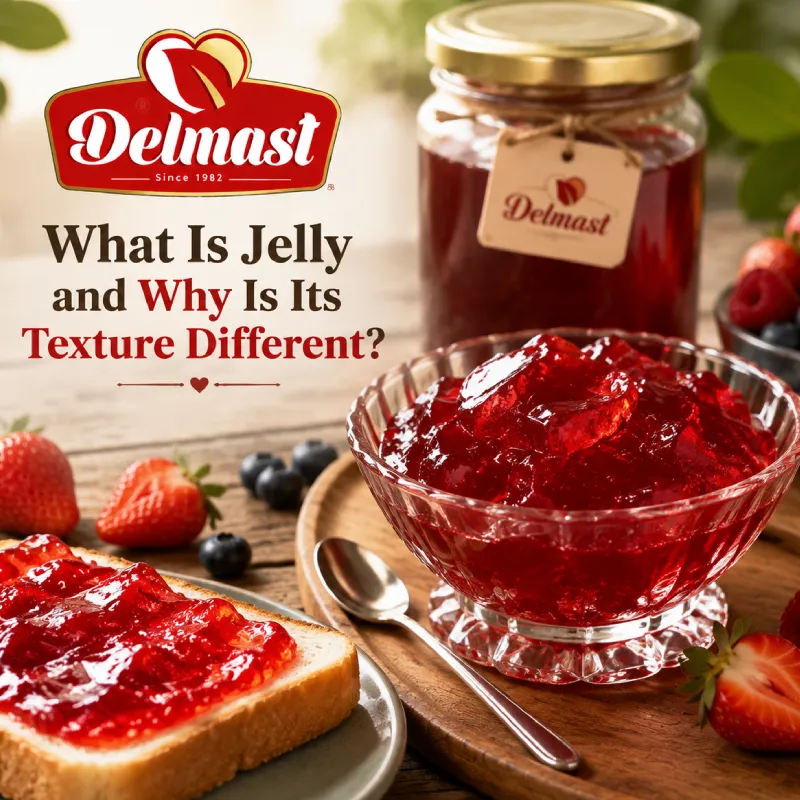
Jelly is created through a different production approach compared with jam. Instead of using crushed fruit, manufacturers extract fruit juice and remove solid particles before the setting process.
The result is a clear, smooth spread with a consistent texture. This makes jelly popular among consumers who prefer a lighter fruit spread without fruit pieces.
The key factors that define jelly quality include:
- Clarity and appearance
- Gel strength
- Flavor intensity
- Balance between sweetness and acidity
From a manufacturing perspective, producing high-quality jelly requires precise filtration and pectin management. Small differences in processing can affect whether the final product is too firm, too soft, or perfectly spreadable.
For food service companies and international buyers, jelly can be an attractive option because its uniform texture makes it suitable for controlled applications such as bakery fillings, hotel breakfast services, and packaged food products.
What Is Marmalade and How Is It Different From Jam?
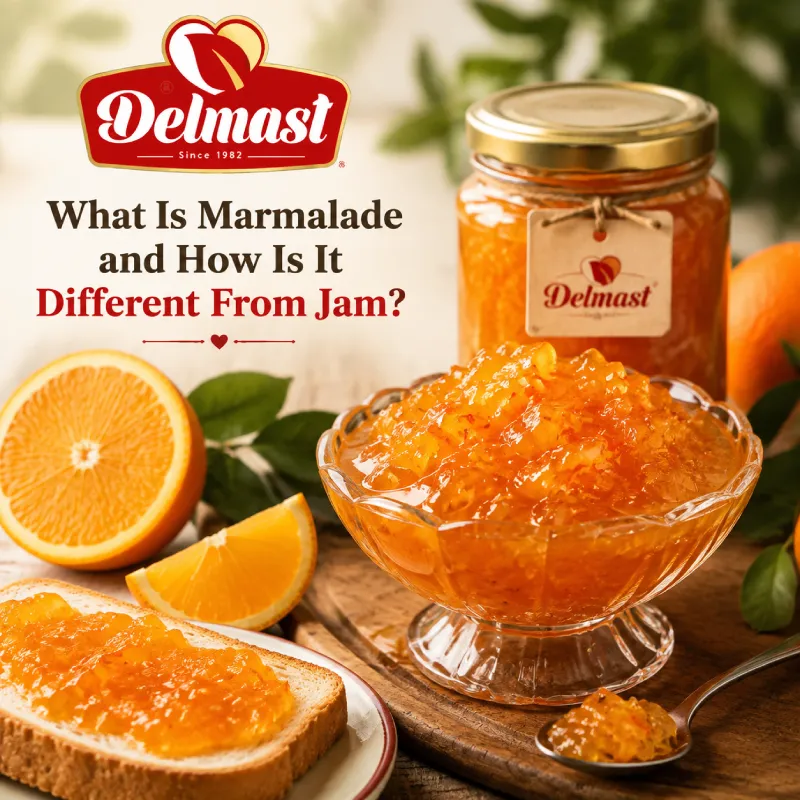
Marmalade has a unique position among fruit spreads because it focuses mainly on citrus fruits and includes fruit peel as part of the recipe.
Traditional marmalade is commonly made with oranges, but other citrus varieties can also be used. The peel creates small pieces throughout the product, adding texture and a slightly bitter flavor that separates it from sweeter spreads.
The main characteristics of marmalade include:
- Citrus-based flavor profile
- Visible peel pieces
- Sweet and slightly bitter taste
- Premium breakfast positioning
The popularity of marmalade varies between regions. In some markets, especially where European-style breakfast products are common, marmalade is considered a premium spread with strong consumer recognition.
For exporters and distributors, understanding these regional preferences is important when selecting products for different markets.
Difference Between Jam, Jelly and Marmalade: Taste, Texture and Usage Comparison
When comparing these three fruit spreads, taste and texture are usually the first things customers notice. Although all three products are made from fruit, each one delivers a different eating experience.
- Jam provides the most natural fruit sensation because it contains crushed fruit or fruit pulp. It usually has a thicker consistency and a richer flavor, making it a popular choice for spreading on bread, filling pastries, and adding flavor to desserts.
- Jelly has a cleaner and smoother texture because it is made from filtered fruit juice. Its transparent appearance and firm structure make it easy to spread and suitable for products where consistency is important.
- Marmalade offers a more distinctive experience because of citrus peel pieces. Its combination of sweetness and mild bitterness creates a more complex flavor profile compared with traditional jam or jelly.
Difference between jam jelly and marmalade taste
The Difference between jam jelly and marmalade taste can be summarized by their main characteristics:
- Jam: Rich fruit flavor, soft texture, and a homemade-style appearance.
- Jelly: Smooth texture, clear appearance, and a lighter fruit taste.
- Marmalade: Citrus-focused flavor with peel pieces and a slightly bitter note.
For consumers, choosing between these products depends on personal preference. Some people prefer the fresh fruit sensation of jam, while others enjoy the smoothness of jelly or the unique citrus character of marmalade.
For food manufacturers, retailers, and distributors, taste is only one factor. Shelf life, packaging format, target market, and product positioning are also important when selecting the right fruit spread.
Jam vs Marmalade: Which One Is Healthier?
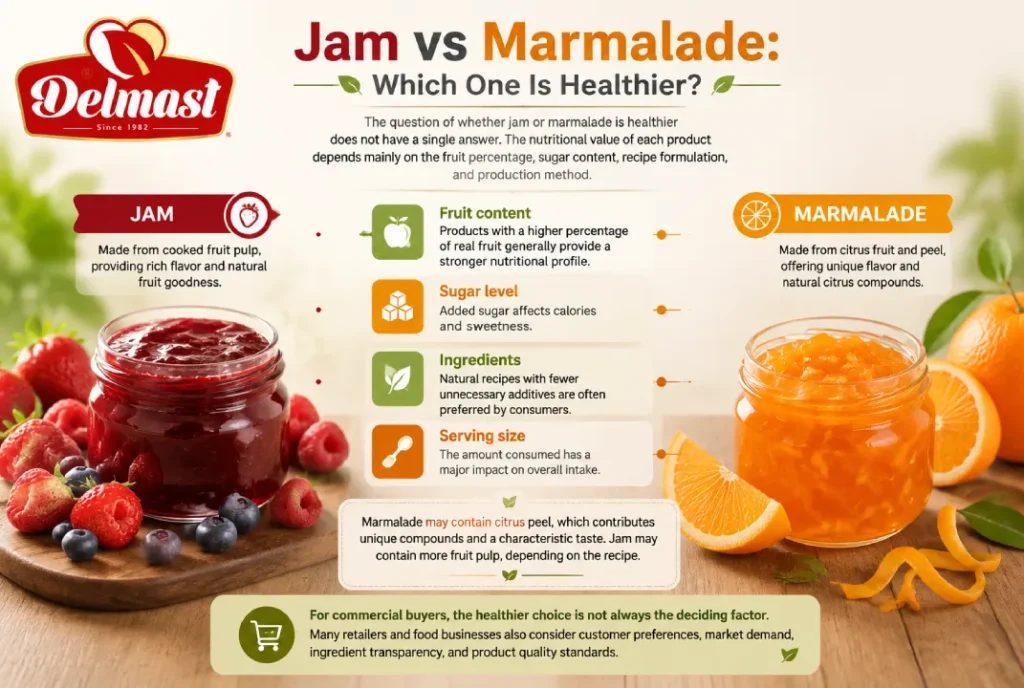
The question of whether jam or marmalade is healthier does not have a single answer. The nutritional value of each product depends mainly on the fruit percentage, sugar content, recipe formulation, and production method.
Both jam and marmalade can provide some benefits from fruit ingredients, including natural flavors and plant-based compounds. However, they are still classified as sweet spreads, meaning portion size and overall diet should be considered.
Some important factors when comparing jam and marmalade include:
- Fruit content: Products with a higher percentage of real fruit generally provide a stronger nutritional profile.
- Sugar level: Added sugar affects calories and sweetness.
- Ingredients: Natural recipes with fewer unnecessary additives are often preferred by consumers.
- Serving size: The amount consumed has a major impact on overall intake.
Marmalade may contain citrus peel, which contributes unique compounds and a characteristic taste. Jam may contain more fruit pulp, depending on the recipe.
For commercial buyers, the healthier choice is not always the deciding factor. Many retailers and food businesses also consider customer preferences, market demand, ingredient transparency, and product quality standards.
Difference Between Jam, Jelly and Marmalade and Preserves
Many consumers also compare these spreads with preserves because the products are often placed in the same category. Understanding the Difference between jam jelly and marmalade and preserves helps clarify why each product has a different market position.
Preserves are made by cooking larger pieces of fruit with sugar. Unlike jam, where fruit is crushed or softened into a spreadable mixture, preserves maintain more visible fruit pieces.
The main differences are:
| Product | Fruit Form | Texture | Main Characteristic |
|---|---|---|---|
| Jam | Crushed or mashed fruit | Thick and spreadable | Rich fruit flavor |
| Jelly | Filtered fruit juice | Smooth and firm | Clear appearance |
| Marmalade | Citrus fruit with peel | Gel-like with peel pieces | Sweet citrus flavor |
| Preserves | Large fruit pieces | Chunky texture | Premium fruit appearance |
Preserves are often positioned as a premium product because the visible fruit pieces create a handmade and high-quality impression.
For international food markets, choosing between jam, jelly, marmalade, and preserves depends on customer expectations. Some regions prefer smooth spreads, while others value visible fruit pieces and traditional preparation styles.
How Food Businesses Choose Between Jam, Jelly and Marmalade
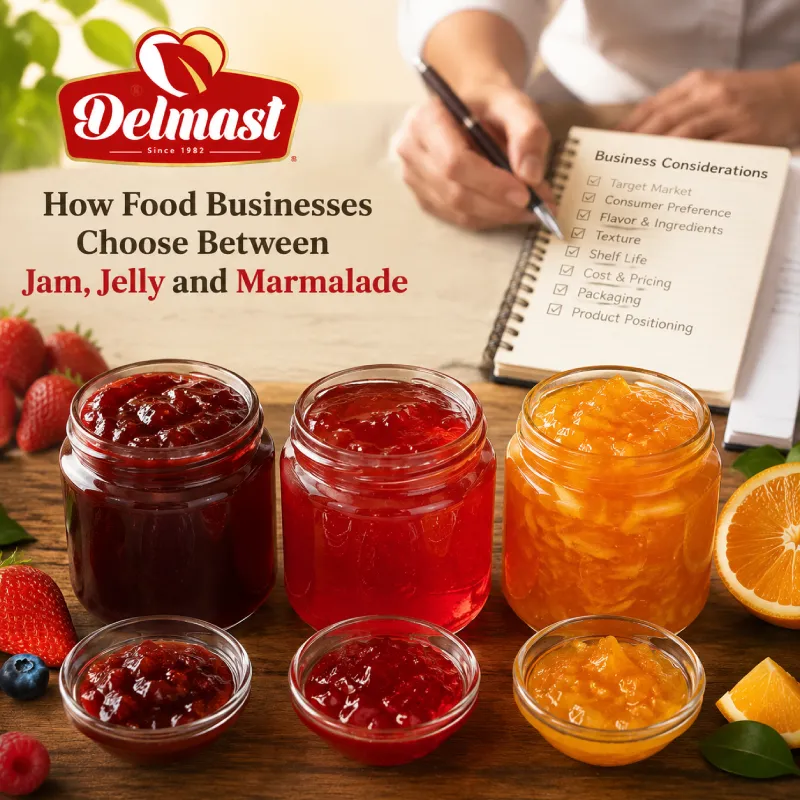
For consumers, choosing a fruit spread is mainly about taste. However, for businesses such as supermarkets, hotels, bakeries, restaurants, and food distributors, product selection involves much more than flavor.
B2B buyers usually evaluate several factors before selecting a supplier or product category:
Market Demand
Different countries and customer groups have different preferences. Some markets have stronger demand for classic strawberry jams, while others prefer citrus marmalade or premium fruit preserves.
Understanding local buying habits helps businesses avoid selecting products that do not match customer expectations.
Packaging Options
Packaging plays an important role in food distribution. Retail brands may require glass jars with attractive labeling, while hotels and restaurants often prefer single-serve portions for breakfast services.
Common packaging formats include:
- Single-serve cups for hotels and food service
- Glass jars for supermarkets and retail shelves
- Bulk packaging for bakeries and industrial users
Consistency and Quality Control
Large-scale buyers need reliable products with consistent taste, texture, and appearance. A professional manufacturer must maintain quality across every production batch.
Factors such as fruit sourcing, production standards, hygiene controls, and packaging technology directly influence customer satisfaction.
Private Label Opportunities
Many companies prefer working with manufacturers that offer private label solutions. This allows retailers and distributors to create their own branded products without managing the entire production process.
A reliable private label partner can support businesses with recipe development, packaging selection, production capacity, and export requirements.
Choosing the Right Fruit Spread Supplier for Your Business
Selecting the right supplier is one of the most important decisions for companies entering the jam and fruit spread market.
A professional supplier should provide more than just a product. Businesses need a partner that understands quality requirements, international standards, and market expectations.
Key points to consider when choosing a fruit spread manufacturer include:
- Experience in food production and export markets
- Reliable sourcing of fruits and ingredients
- Flexible packaging solutions
- Ability to handle wholesale orders
- Consistent production quality
- Support for private label projects
For companies looking for wholesale or private label solutions, working with an experienced manufacturer can reduce production challenges and create stronger market opportunities.
As a food manufacturer and exporter, Delmast focuses on producing high-quality fruit spreads while supporting businesses with different packaging needs, from retail products to larger commercial requirements.
A strong manufacturing partner helps brands create products that meet customer expectations while maintaining consistency across different markets.
Understanding Fruit Spreads Helps Build Better Choices
Jam, jelly, and marmalade may appear similar at first glance, but their ingredients, textures, flavors, and production methods create completely different products.
The Difference Between Jam Jelly and Marmalade is not only important for consumers who want to choose the right spread for breakfast or cooking. It is also valuable information for retailers, distributors, and food businesses planning their product selection.
Jam offers a rich fruit experience, jelly provides a smooth and consistent texture, and marmalade delivers a distinctive citrus flavor. Understanding these differences allows businesses to match products with customer expectations and market needs.
For companies searching for reliable fruit spread solutions, choosing an experienced manufacturer with strong production capabilities and flexible supply options is a key step toward long-term success.